Policy Brief n°7 : Common misconceptions about public development aid
Published on 02/09/2019.
After a large rise in official development assistance (ODA) from 2000 onwards, there has also been a corresponding surge in criticism: at best, aid is ineffective; at worst, it is counter-productive and even dangerous for developing countries. It is important to take a step back from the binary arguments for or against, and accept that aid can never resolve every development and poverty issue; but we also know that aid can (and does) help.
In this case, it seems more sensible to focus on the conditions which ensure that aid is effective: such as targeting, coordination, predictability, flexibility of instruments, policy coherence, etc. We also need to examine how aid can be complimentary to other development financing flows.
Research on both exists, and clearly demonstrates the crucial role of aid in reaching the poorest populations. And international organisations have invested heavily in recent years in tools to better measure the impact of their aid.
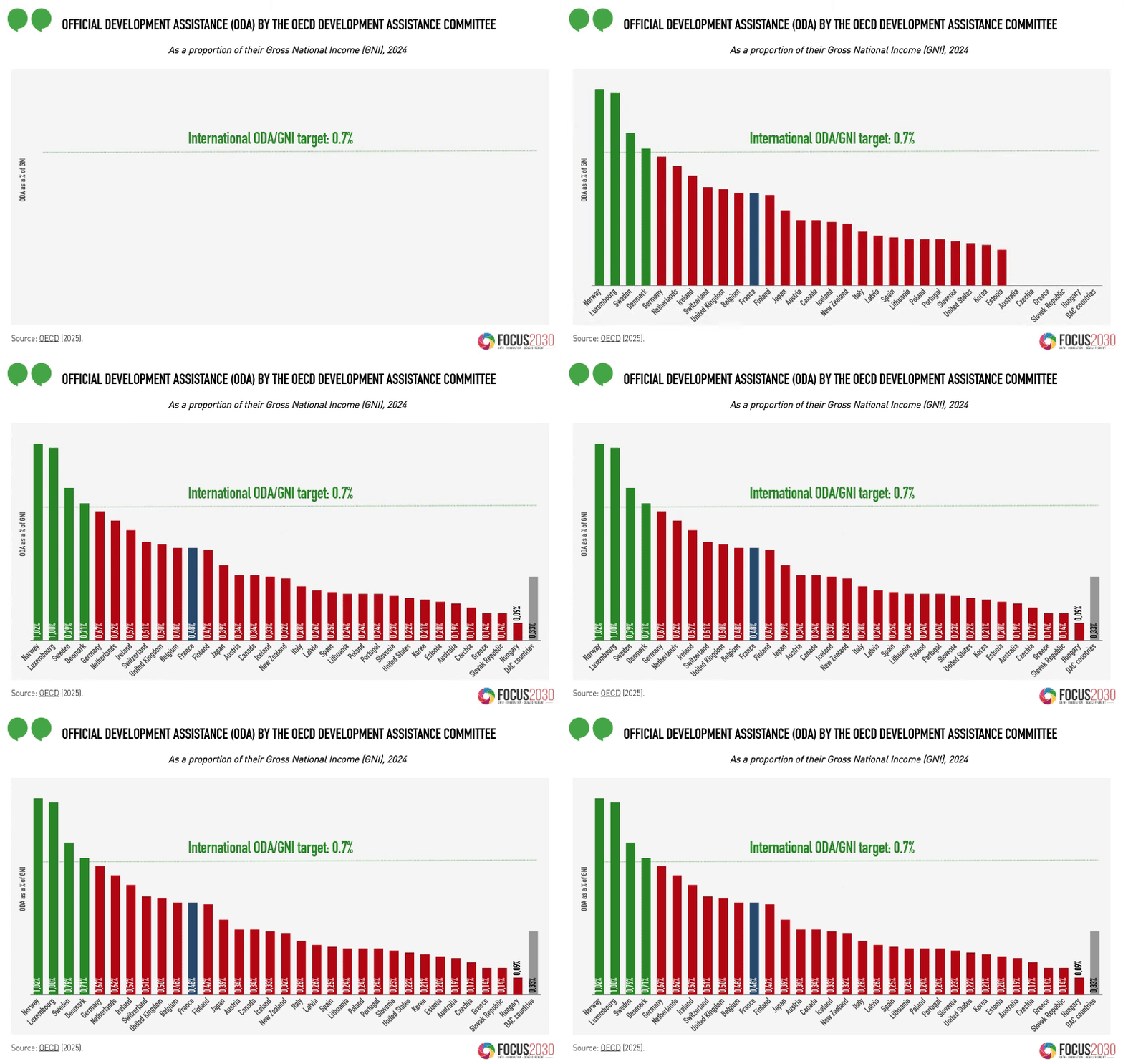
And in reality, aid itself represents only a tiny part of donors’ budgets: in the world’s 30 richest countries, only three out of every thousand dollars go on aid for the poorest. The fact that less than 10% of the global population lived in extreme poverty in 2015, compared to 37% in 1990 and 44% in 1981, also demonstrates just how much such a small amount can achieve.
Whatever the different criticisms of development aid, it is important to underline the crucial role it plays in tackling extreme poverty and achieving the Sustainable Development Goals (SDGs), in redistributing global wealth toward specific investments to benefit all, such as addressing the following:
– Even with the most optimistic of economic forecasts, it is estimated that we will need an additional 70 billion euros every year to provide basic services in the poorest countries.
– If trends of the last fifteen years continue, there will be 167 million children, mostly in sub-Saharan Africa, still living in extreme poverty by 2030.
– As part of the package of different forms of development financing, ODA is essential for developing countries because it is provided in grant-form (and therefore more appropriate for tackling issues such as health or education, which do not easily match private sector or aid provided in loans).
Here are 7 common misconceptions about public development assistance which are explored in our Policy Brief:
Common misconception n°1: Official development assistance (ODA) is too high
Common misconception n°2: Aid is ineffective
Common misconception n°3: Aid mostly benefits corrupt regimes
Common misconception n°4: Donors only give aid for economic and diplomatic benefit
Common misconception n°5: Economic investment and strengthening domestic tax systems are more effective than aid
Common misconception n°6: ODA is a minor source of financing compared to other flows
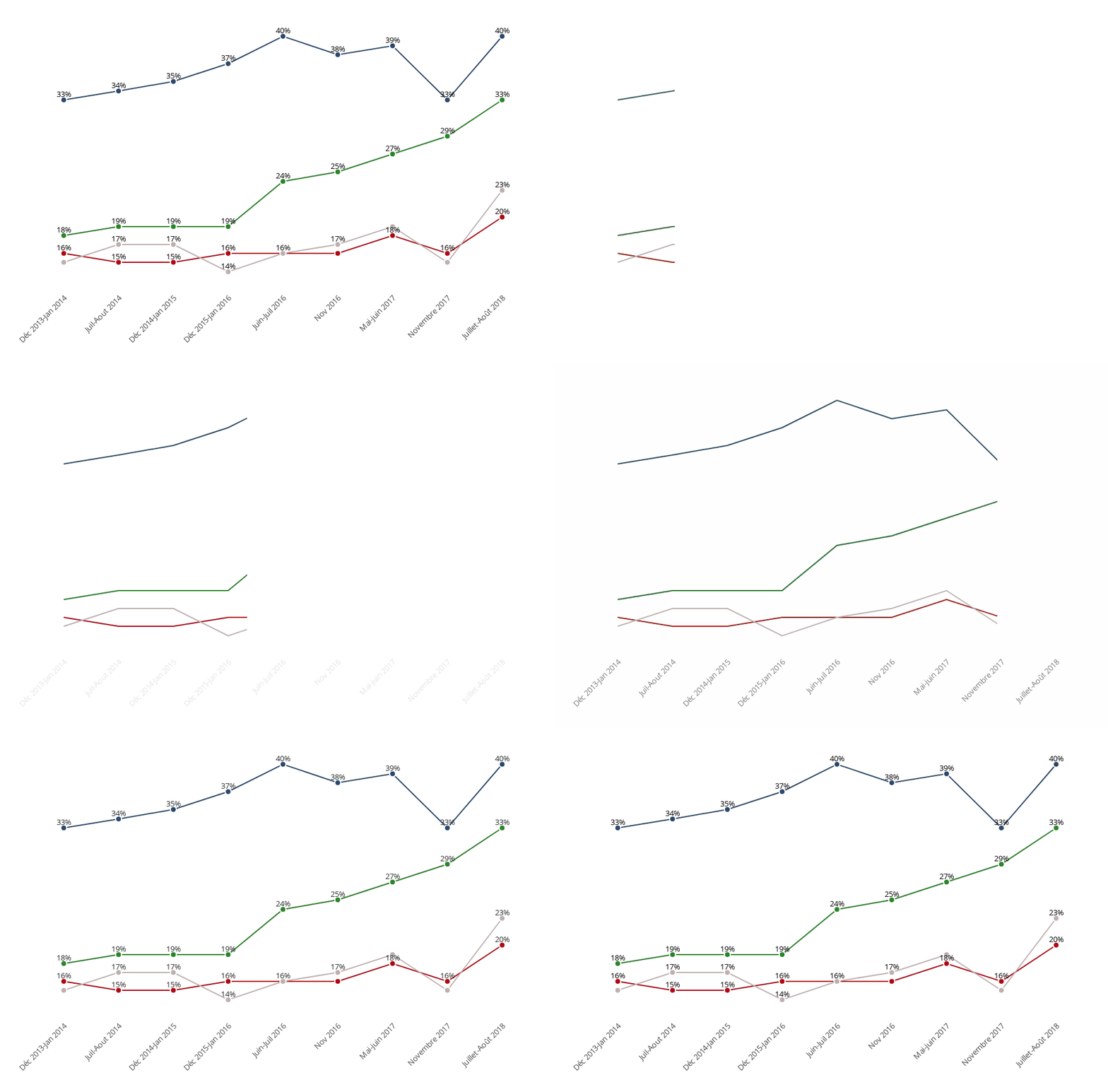
Common misconception n°7: Extreme poverty has been sufficiently reduced in the world
You can download our Policy Brief n°7 in French here. An English translation is forthcoming.