Contact

  • Français
  • Español
  • Surveys - Analysis
    Français    

    Priorities for international development, as seen by the Americans, British, French and Germans

    Published on 28/12/2018.

    Views are varied – but not necessarily opposed – between France, Germany, the UK and the US when it comes to their citizens’ priorities for development spending.

    Views settle around differences in opinion on urgent, short- or medium-term priorities, as well as along a spectrum from practical to ideological preferences.

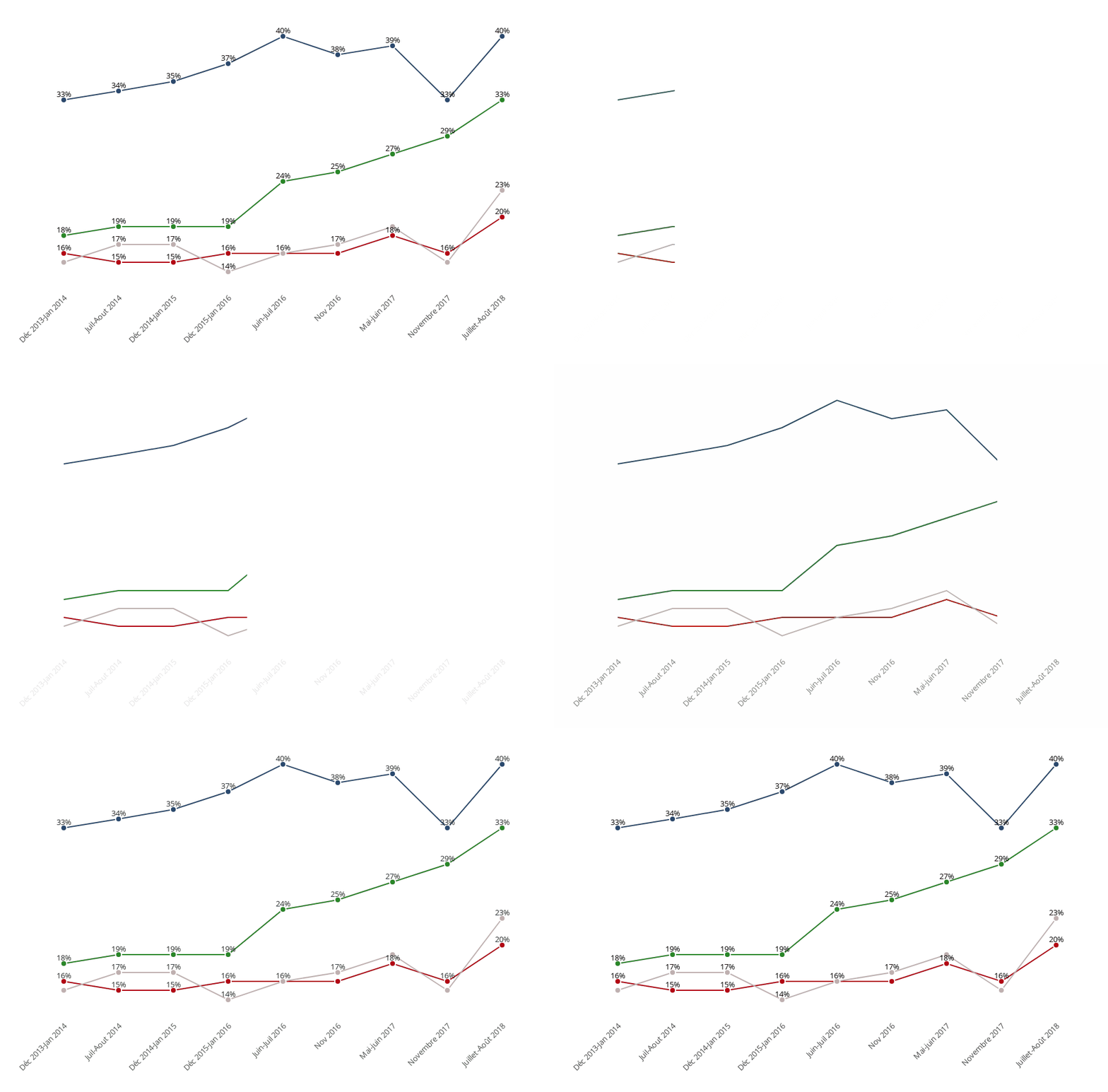
    Making development expenditure on agriculture a priority is one common point for all four countries. The same trend is observable for family planning or supporting economic development. On the other hand, investing in gender equality and women’s rights is particularly appealing to French respondents (42%) but less so for British (21%), German (28%) or American respondents (32%).

    And, in reverse, providing funding for crisis and disaster management is particularly favoured by Americans (51%) and British people (52%), and then Germans (43%), but much less so by French people (35%) who are less likely to see development as being an investment for urgent need.

    Education is a particular priority for Germans (38%) and French people (34%), whereas British and American people seem to think economic development and debt relief are bigger priorities.

    Transparency of public policy and respect for equality are also important for German (34%), British (35%) and Americans (37%), compared to only 23% of French people who show interest in these angles of development work.

    Health and vaccination issues appear as medium priorities, for example with support from French and German people at around 27%, with nevertheless a higher level of interest from both the British (35%) and American people (32%).

    This data comes from our survey conducted by the YouGov Institute and piloted by the research team at University College London and the University of Birmingham as part of the project Aid Attitudes Tracker which measures the evolution of opinions and behaviors on issues of international solidarity in four countries.

    To learn more
  • Retrouvez la méthodologie du projet Aid Attitudes Tracker
  • ALSO READ

    Development financing - 09 April 2026

    Historic drop in Official Development Assistance in 2025

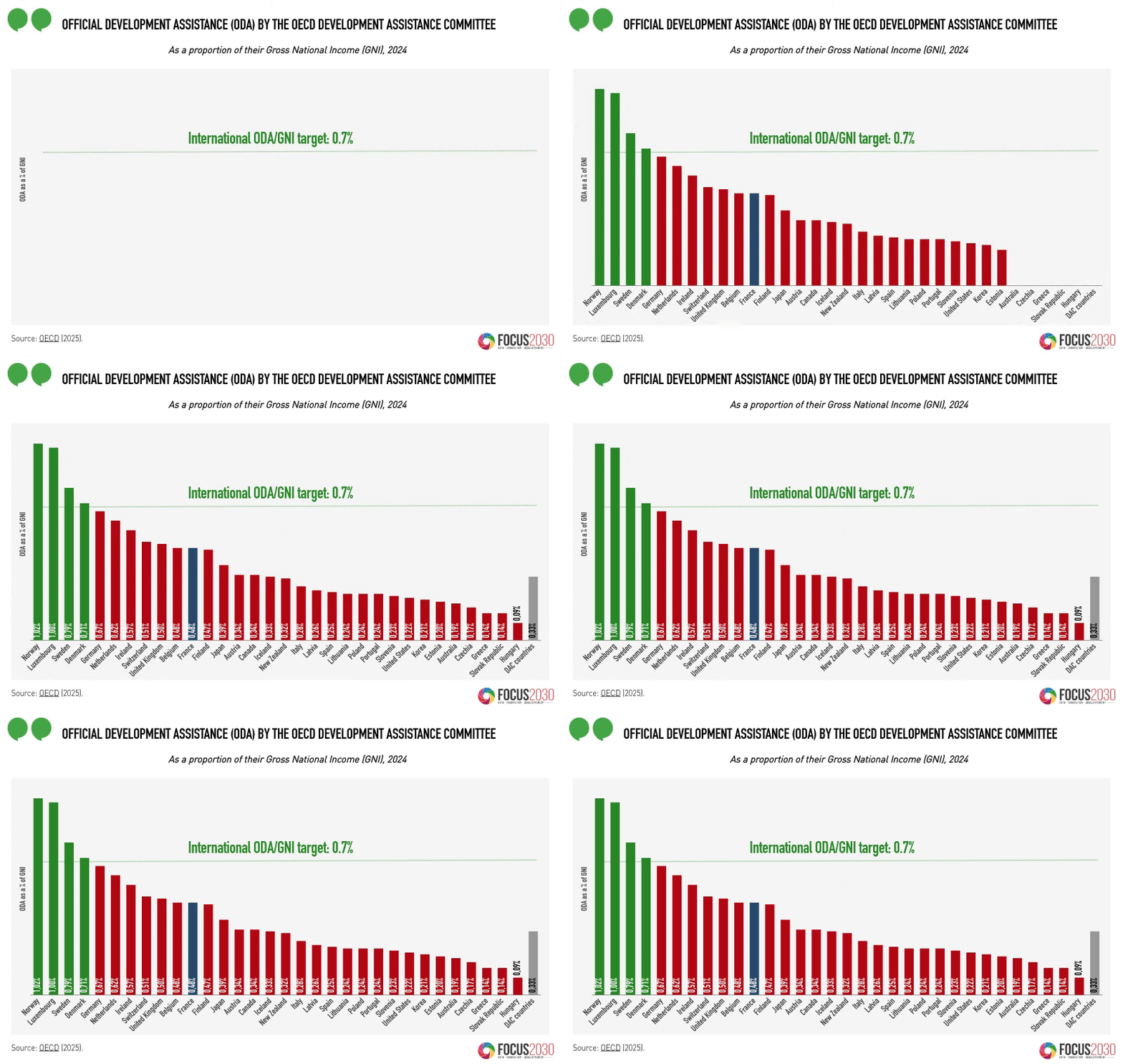
    ODA from DAC members fell to 174.3 billion USD in 2025, a 23.1% drop from 2024 (-50 billion USD in real terms), representing 0.26% of their income. It is the highest fall on record. 
    Development financing - 30 March 2026

    The African Development Fund: allocating concessional resources to the 37 most vulnerable countries on the continent

    As the 17th replenishment of the African Development Fund (ADF-17), held on 15-16 December 2025 in London, draws to a close, expressed financing needs from beneficiary countries have reached USD 25 billion. In a context of mounting budgetary pressures among traditional donors, a central question emerges : will international mobilization be sufficient to meet the challenges ?
    Development financing - 03 February 2026

    2026 Finance Bill: a fifth cut in French official development assistance

    France's finance bill for 2026 enshrines a 803 million euros cut in the ODA budget, the fifth in less than two years. Analysis.
    Development financing - 08 January 2026

    A majority of French people support an increase in development aid

    56% of French people want to maintain or increase official development assistance to the poorest countries.
    Development financing - 01 July 2025

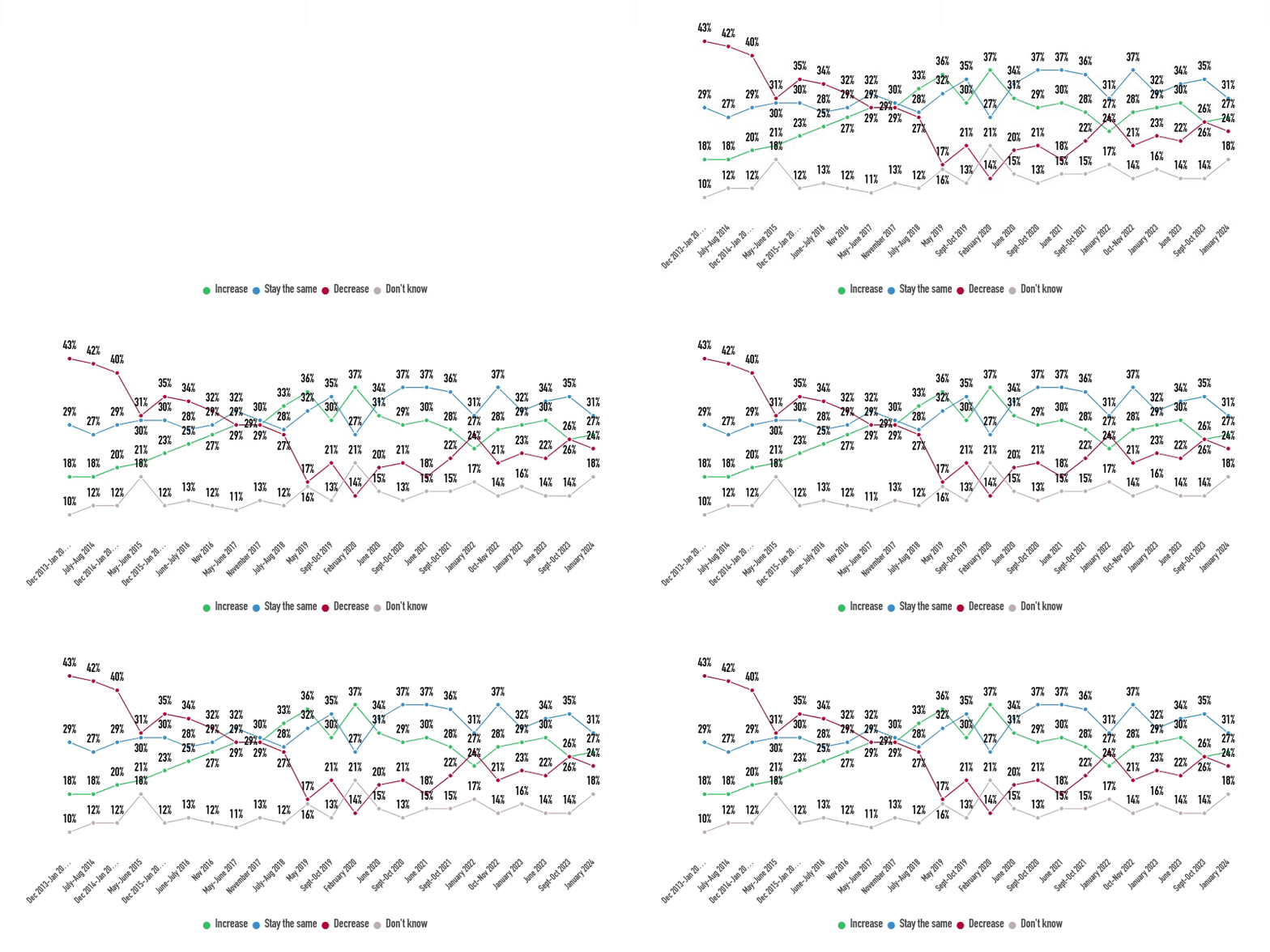
    Increase or decrease development aid? Evolution of opinions in France, Germany, the United Kingdom and the United States

    In partnership with University College London (UCL) and Birmingham University, Focus 2030 is conducting a research-action program to analyze the perceptions, attitudes, behaviors and feelings of citizens on international solidarity issues in four countries: France, Germany, United States and United Kingdom.
    Development financing - 20 June 2025

    The impact of Donald Trump’s presidency on international development. An analysis.

    As Donald Trump is sworn in for a second term, what are the consequences for the international solidarity sector and the global fight against poverty and inequality? Analysis.