Contact

  • Français
  • Español
  • Surveys - Analysis
    Français    

    Helping those in poor countries: a particular priority for European citizens

    Published on 14/12/2018.

    A large majority of European citizens think that it is very or quite important to help people in developing countries.

    This overwhelmingly majority opinion does not however delve into the detail of what European citizens would be willing to do for the poorest people in developing countries. It does, however, clearly show that they are neither indifferent nor insensitive to the daily lives and struggle of the poor in developing countries.

    This question also has a very high response rate, with less than 4% of respondents saying that they “don’t know”.

    Among the countries chosen for this graph, we can see that French people have the highest number of those who do not think it is important to help people in developing countries. This is above the European average (9%). The Estonians are the least willing to say that it is important to help poor countries. The lowest number for this return was for those from Luxembourg and Sweden (2%).

    Those European countries with the biggest or most-thriving economies are those who are the most likely to say it is important to help developing countries. France and Italy are the two exceptions to this.

    Opinion poll carried out on line by TNS Opinion and Social for the European Commission – Directorate General for International Cooperation and Development. This study was also coordinated by the European Commission Directorate General for Communication.

    Eurobarometer Special 476 – wave EB89.3. Carried out between 21 June and 6 July 2018. Published Septembre 2018.

    Opinion poll based on answers from 27732 respondents from all 28 countries, representative of the adult population of each country, ie 1035 people in Spain. Source: ec.europa.eu

    ALSO READ

    Sustainable Development Goals - 09 February 2026

    37% of French people have already adapted their consumption habits in order to better fight against world poverty

    Poverty and development can change consumer behavior for 37% of French people, whether through a boycott or particular product choice.
    Financing for Development (SDG) - 20 January 2026

    United States withdrawal from 66 international organizations: a new step in a disengagement initiated in 2025

    On January 7, 2026, the United States announced its withdrawal from 66 international organizations, including 31 entities within the United Nations system. This decision marks a new phase in a disengagement from multilateral cooperation initiated early 2025, directly affecting progress toward all the Sustainable Development Goals.
    Sustainable Development Goals - 02 January 2026

    One year after the freeze on U.S. international aid: unprecedented human consequences

    One year after the suspension of U.S. official development assistance (ODA), the consequences on health systems, humanitarian responses, and multilateral financing are now clearly evident. As the world’s leading donor country through 2024, the U.S. withdrawal is profoundly reshaping the architecture of international solidarity and undermining progress toward the Sustainable Development Goals.
    Sustainable Development Goals - 12 September 2025

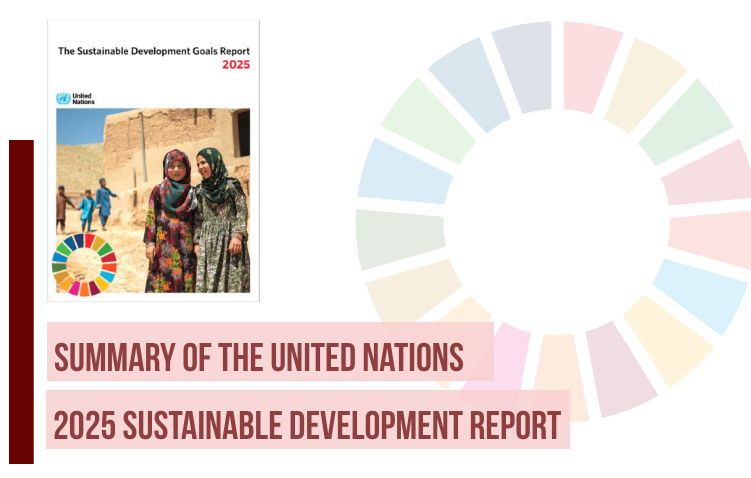
    Summary of the United Nations Sustainable Development Goals Report 2025

    Discover the summary of the United Nations' 2025 Sustainable Development Goals report.
    Interviews - 11 September 2025

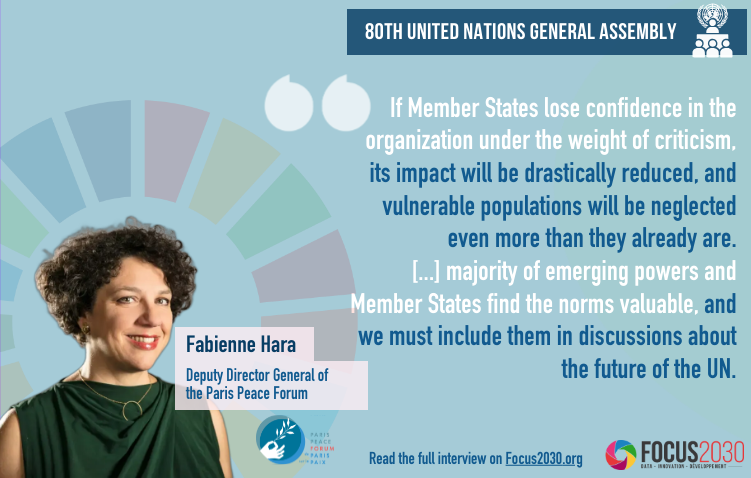
    3 questions to Fabienne Hara, Deputy Director General of the Paris Peace Forum

    Discover the interview of Fabienne Hara, Deputy Director General of the Paris Peace Forum, ahead of the 80th United Nations General Assembly.
    Interviews - 09 September 2025

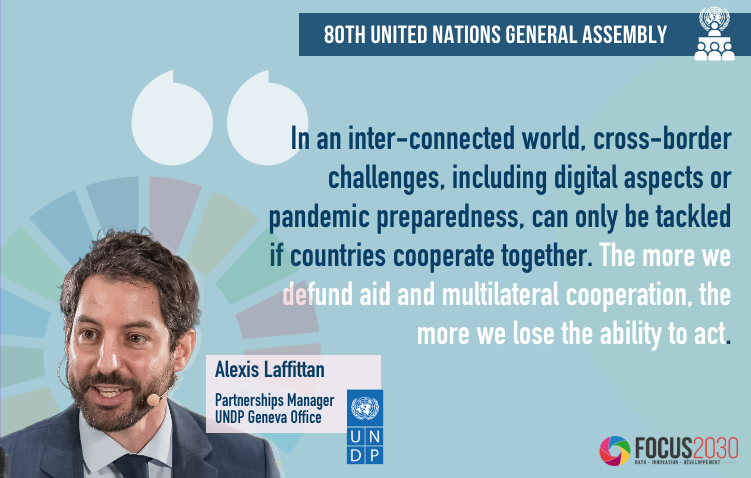
    3 questions to Alexis Laffittan, Partnerships Manager, UNDP Geneva Office

    Discover the interview of Alexis Laffittan, Partnerships Manager, UNDP Geneva Office, ahead of the 80th United Nations General Assembly.