Contact

  • English
  • Español
  • Surveys - Analysis Articles

    Links between concern about global poverty, and support for the European Union

    Published on 14/12/2018.

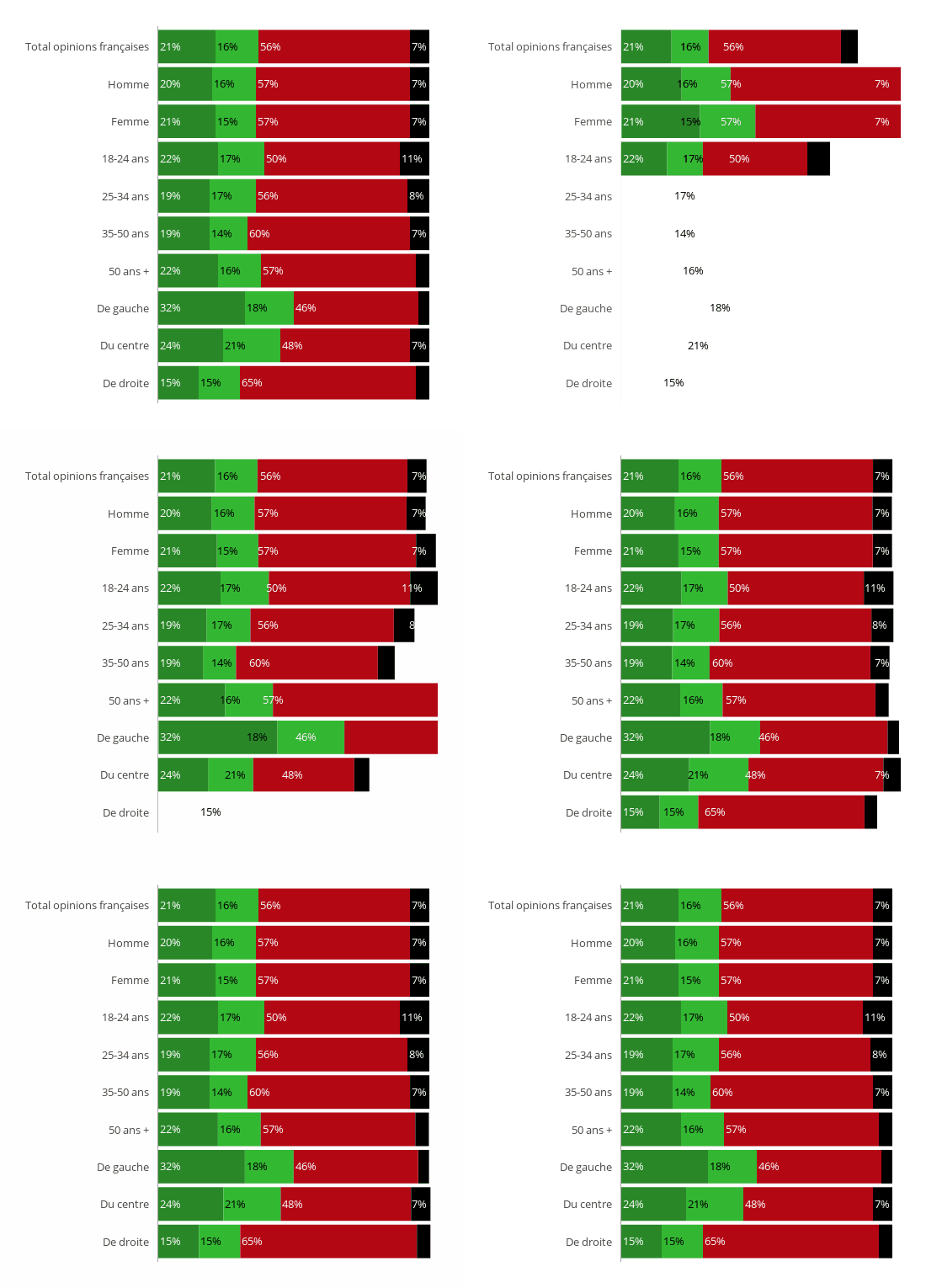
    39% of French people think that the French economy would be worse off if France left the European Union. This is double the number who think the opposite.

    In parallel, those French people who are the most concerned about global poverty are also those (50%) who see a positive link between being a member state of the European Union and a strong economy for France.

    In this way, there is a positive loop between support for development and identification of a positive economic benefit at a national level to open borders to the world beyond (in this case, to a European level).

    Logically, those who see France as a national, individual territory (for example those who voted for far-right candidate Marine le Pen at the 2017 Presidential elections) are also those who have a negative opinion on the EU and who are less concerned about development issues.

    This data comes from our survey conducted by the YouGov Institute and piloted by the research team at University College London and the University of Birmingham as part of the project Aid Attitudes Tracker which measures the evolution of opinions and behaviors on issues of international solidarity in four countries.

    To learn more
  • Retrouvez la méthodologie du projet Aid Attitudes Tracker
  • ALSO READ

    Sustainable Development Goals - 09 February 2026

    37% of French people have already adapted their consumption habits in order to better fight against world poverty

    Poverty and development can change consumer behavior for 37% of French people, whether through a boycott or particular product choice.
    Financing for Development (SDG) - 20 January 2026

    United States withdrawal from 66 international organizations: a new step in a disengagement initiated in 2025

    On January 7, 2026, the United States announced its withdrawal from 66 international organizations, including 31 entities within the United Nations system. This decision marks a new phase in a disengagement from multilateral cooperation initiated early 2025, directly affecting progress toward all the Sustainable Development Goals, particularly in the areas of climate, gender equality, global health, and development financing. An analysis. Key measures […]
    Sustainable Development Goals - 02 January 2026

    One year after the freeze on U.S. international aid: unprecedented human consequences

    One year after the suspension of U.S. official development assistance (ODA), the consequences on health systems, humanitarian responses, and multilateral financing are now clearly evident. As the world’s leading donor country through 2024, the U.S. withdrawal is profoundly reshaping the architecture of international solidarity and undermining progress toward the Sustainable Development Goals.
    Sustainable Development Goals - 12 September 2025

    Summary of the United Nations Sustainable Development Goals Report 2025

    Discover the summary of the United Nations' 2025 Sustainable Development Goals report.
    Interviews - 11 September 2025

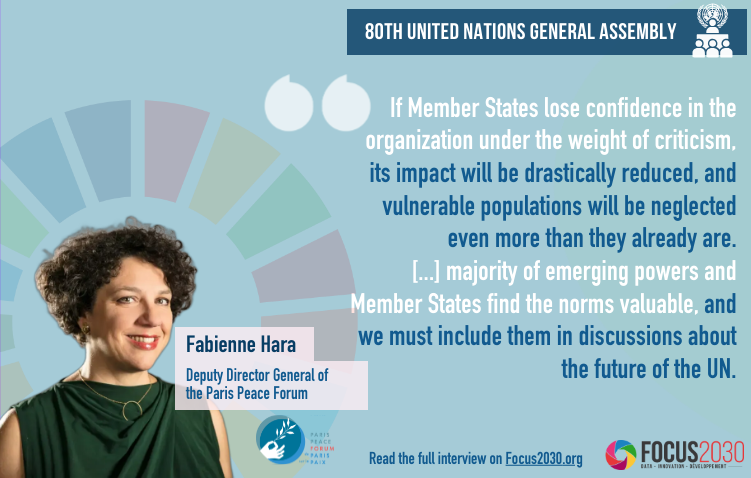
    3 questions to Fabienne Hara, Deputy Director General of the Paris Peace Forum

    Focus 2030  : Since 2018, the Paris Peace Forum has brought together various stakeholders, including international organizations, civil society, and the private sector, to “reinvent diplomacy in a changing world” by identifying gaps in global governance and addressing new global challenges. The ongoing crisis in multilateralism is considered by many to be the most severe since the […]
    Interviews - 09 September 2025

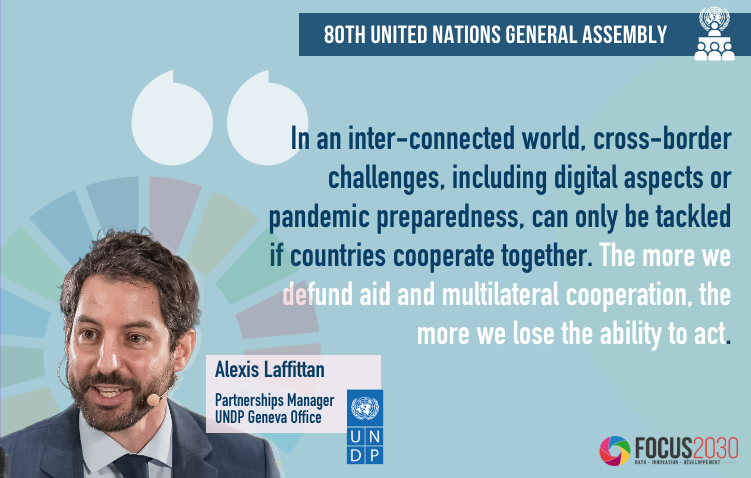
    3 questions to Alexis Laffittan, Partnerships Manager, UNDP Geneva Office

    Focus 2030 : The 2025 UNDP Human Development Report shows an unprecedented slowdown in global human development, with widening inequalities and stalled progress across all regions. At the same time, AI is emerging as a potential game-changer. How can countries harness AI to reignite human development while ensuring that technological advances do not deepen existing inequalities ? Alexis Laffittan  : The latest […]