About Focus 2030
Our Vision
Focus 2030’s ambition is to help place development issues on political, media, scientific, and civic agendas, and to support international solidarity actors in the adoption of concrete and effective measures to fight poverty and inequality worldwide.
In the face of today’s and tomorrow’s global challenges, we are convinced that urgent and collective action is needed to ensure that no one is left behind.
This is the very ambition of the Sustainable Development Goals: a set of 17 objectives established by the United Nations and adopted by 193 countries, aimed at ensuring a dignified life for as many people as possible and contributing to the emergence of a more stable, environmentally respectful, and equitable world by 2030.
Find out why Focus 2030 is committed to the Sustainable Development Goals.
Our Mission
Focus 2030 strengthens the impact, visibility, and influence of international solidarity actors – NGOs, international organizations, public authorities, foundations, and research centers – in order to promote ambitious and coherent public policies that address major global challenges.
To achieve this, Focus 2030 acts on three complementary levers:
- Communication and citizen engagement:
Make international solidarity issues visible, structure fact-based arguments, and support mobilization efforts.
- Data, research, and analysis:
Produce, analyze, and share reliable and accessible data to inform public debate and support the development of effective public policies.
- Advocacy with public authorities:
Support actors in formulating and presenting recommendations to policymakers and the international community.
Focus 2030 also offers a range of resources for international solidarity actors:
- Ready-to-use data to understand and analyze major development challenges (analyses, opinion surveys, evaluations);
- Communication and advocacy tools to inform, persuade, and take action;
- Strategic and financial support to strengthen and scale up initiatives;
- Multi-stakeholder dialogue spaces fostering the sharing of information and recommendations.
Our Areas of Action
Focus 2030 focuses primarily on the following areas:
- Development financing
- Global health
- Gender equality
- All international opportunities that can help advance progress toward achieving all Sustainable Development Goals (SDGs)
Where We Act
Focus 2030 operates:
- In Europe: France, Spain, Italy, priority intervention countries where we support our partners in analyzing public policies, mobilizing citizens, and carrying out advocacy actions.
- On the African continent where we support initiatives with local and international partners, highlighting African solutions, and fostering exchanges and cooperation.
- Worldwide in partnership with over 150 organizations, development agencies, NGOs, think tanks, media outlets, institutions, and citizen movements.
Board of Directors
Focus 2030 is a non-profit association under French law (loi 1901), established on June 18, 2017, and managed by a volunteer Board of Directors.
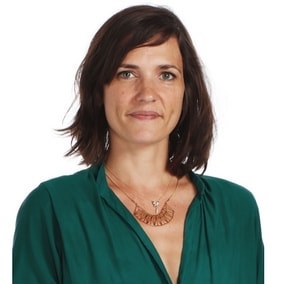
Co-founder and President


Secretary
Treasurer
The Team
On a daily basis, Focus 2030’s staff conducts studies on international solidarity issues, supports projects financially backed by the association, provides assistance in communication, citizen engagement, research, and advocacy, and facilitates exchanges among development actors through working groups and events.
The Development Engagement Lab Team
Since 2017, Focus 2030 has been working closely with the research team of the Development Engagement Lab at UCLand Birmingham University to conduct and analyze opinion surveys on international solidarity issues.