Summary of the United Nations Sustainable Development Goals Report 2025
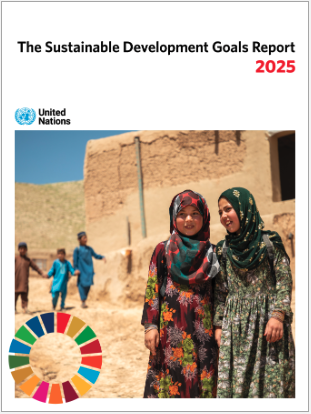
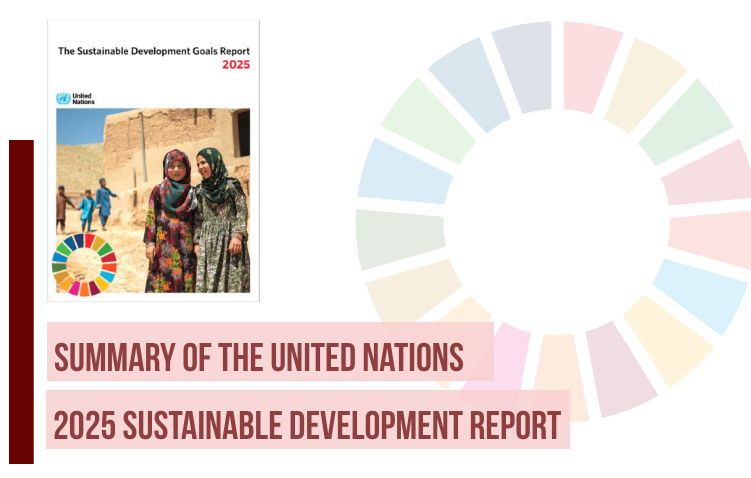
Ten years after the adoption of the 17 Sustainable Development Goals (SDGs) by the 193 United Nations Member States, the 2025 edition of the Sustainable Development Goals Report highlights a key finding: only 35% of targets are on track or progressing at a moderate pace.
With five years remaining until the 2030 deadline, progress remains insufficient to achieve the full set of goals.
In a context marked by multiple crises (climatic, social, and economic), rising inequalities, and increasing pressure on multilateralism, current trajectories appear fragile.
Summary.
Five years to 2030: where do SDG targets stand?
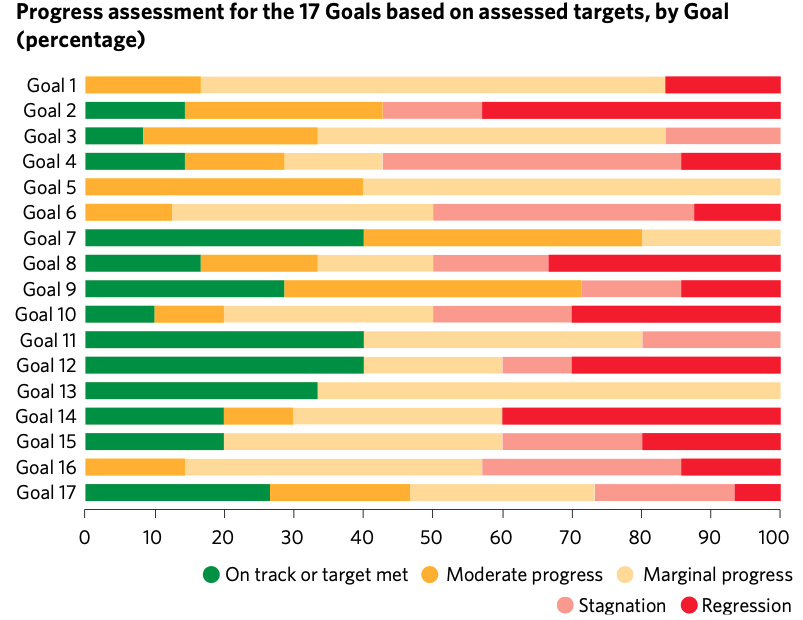
The 17 Sustainable Development Goals are broken down into 169 targets that specify the ambition of each goal. Among the 139 targets for which data are available, 35% are on track or progressing at a moderate pace, nearly half are progressing too slowly, and a significant share, 18%, are moving backward compared to the 2015 baseline.
Progress varies widely across goals. Improvements are observed in areas such as access to electricity, digital connectivity, access to education, and maternal mortality. By contrast, several key indicators are deteriorating, particularly in relation to food security, extreme poverty, and certain dimensions of gender equality.
Data and statistics: an uncertain outlook
The report highlights the central role of data financing in monitoring progress on the Sustainable Development Goals.
According to the 2024 PARIS21 report, international financial support for data in low- and middle-income countries increased by 50% between 2015 and 2022, rising from USD 586 million to USD 875 million.
This increase has been partly driven by funding from private foundations, multilateral organizations, and non-members of the OECD Development Assistance Committee (DAC), while contributions from DAC members have remained stable. However, this positive trend is now under threat due to the overall decline in official development assistance (ODA) between 2023 and 2025.
This already fragile system relies on a limited number of donors: in 2022, nine providers accounted for 70% of total support, including the World Bank (26%), the United States (14%), and the Inter-American Development Bank (10%). The suspension of U.S. funding and the closure of USAID in February 2025 have already disrupted the Demographic and Health Surveys (DHS).
These surveys contribute to monitoring 39 SDG indicators since 2015. SDG 3 (good health and well-being) is the most affected, followed by SDG 5 (gender equality) and SDG 2 (zero hunger). Some indicators rely heavily on DHS: since 2015, 70% of data on contraceptive use and sexual violence have come from these surveys, as well as more than half of data on female genital mutilation, slum housing conditions, and access to basic services. This disruption particularly affects countries in sub-Saharan Africa and the least developed countries, which depend heavily on these mechanisms.
Beyond technical considerations, the weakening of data systems limits the ability of governments and international organizations to guide public policies and to monitor commitments related to the 2030 Agenda.
Financing, international cooperation, and priority areas for action
The report highlights a gap between financing needs and available resources. According to the United Nations, developing countries face an annual financing gap of USD 4 trillion to support the necessary transitions. The slowdown in progress is driven by a combination of factors, including conflicts, the impacts of climate change, rising inequalities, and financial constraints.
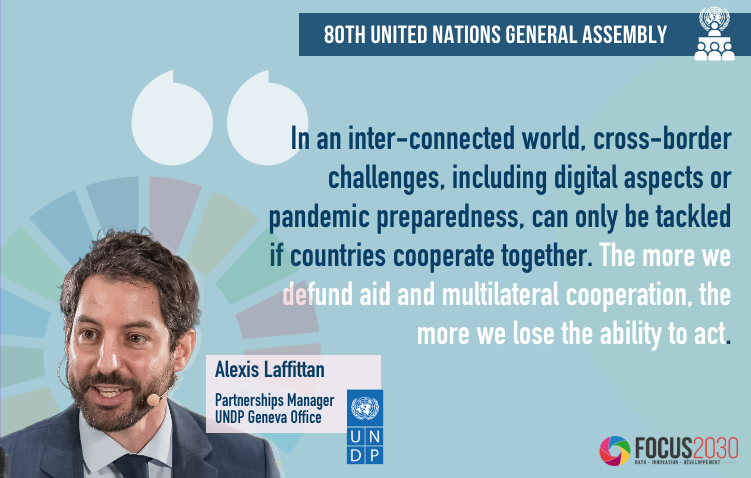
In a context of declining official development assistance and increasing budgetary pressures, mobilizing public and private financing at scale is a key lever for the next five years.
The report identifies six priority areas to accelerate progress:
- food systems,
- access to sustainable energy,
- digital connectivity,
- education reform,
- employment and social protection,
- climate and biodiversity action.
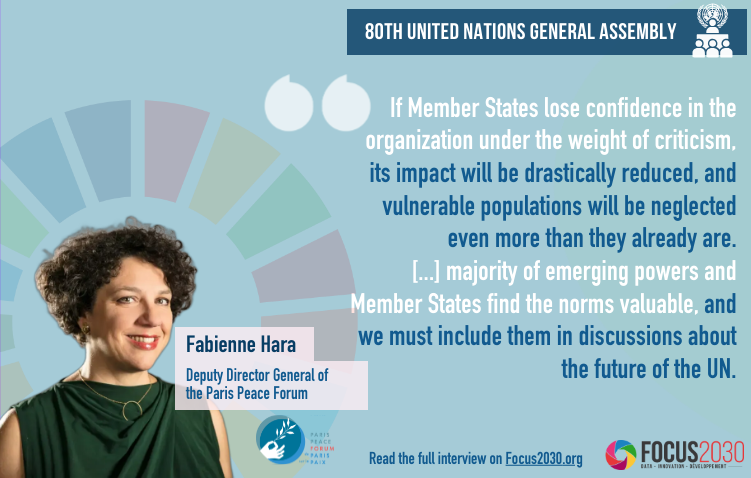
It also underscores the importance of strengthening international cooperation, mobilizing adequate financing, and ensuring the availability of reliable data to inform decision-making. The next five years represent a decisive window. They will determine not only the level of achievement of the Sustainable Development Goals, but also the capacity of the multilateral system to address increasingly interconnected global challenges.