Feminist Foreign Policies: Key Takeaways from the 5th Ministerial Conference in Madrid
Five Key Takeaways
- 28 states adopted a joint political declaration.
- The text places democracy, peace, and gender equality at the heart of feminist foreign policies.
- Anti-rights movements, gender-based disinformation, and online violence are identified as major threats.
- Funding for feminist organizations is presented as a priority.
- The next ministerial conference will be held in Morocco in 2027.
A focus on the links between peace, democracy, and gender equality
Spain hosted the 5th Ministerial Conference on Feminist Foreign Policies in Madrid on June 2–3, 2026, under the theme “Building Peace and Democracy” to strengthen a global, inclusive, transformative, and human rights-based feminist foreign policy. The event brought together 700 participants, including ministerial delegations from 60 countries and more than 140 representatives from civil society organizations, feminist movements, and human rights organizations from around the world.
Just a few months after the conference held in Paris in 2025, this new edition took place in an international context marked by the multiplication of conflicts, democratic backsliding, and worsening inequalities.
A political declaration signed by 28 states
The conference concluded with the adoption of a joint political declaration endorsed by 28 states. In the declaration, the signatories reaffirm that gender equality, the rights of women and girls, and feminist foreign policies are key tools for strengthening democracy, preventing conflict, and supporting more inclusive societies.
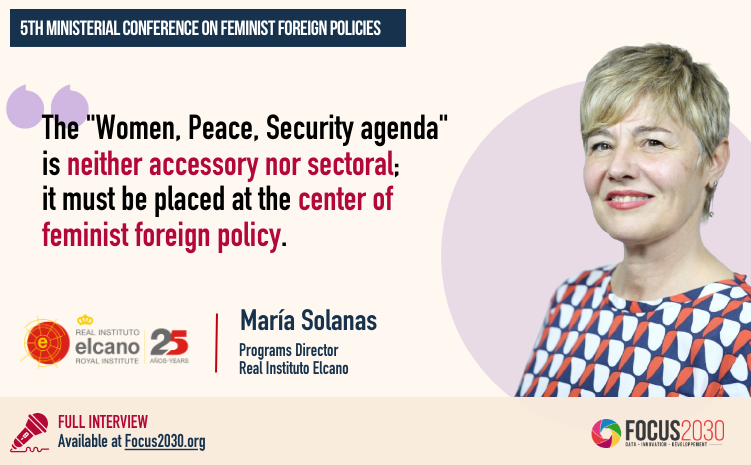
In continuity with previous Ministerial Conferences on Feminist Foreign Policies, the declaration draws on several international frameworks, including the Convention on the Elimination of All Forms of Discrimination against Women (CEDAW), the Beijing Declaration and Platform for Action, the Women, Peace and Security agenda, the Sustainable Development Goals, and international agreements related to climate, biodiversity, and desertification. It also reaffirms the role of multilateralism, the rule of law, and human rights as foundations of a fair and inclusive international order.
The signatories commit to :
- Guarantee respect for, promotion, and protection of the human rights of women and girls, through an intersectional approach; strengthening access to justice and reparations; reinforcing independent international accountability mechanisms; supporting efforts to hold states accountable for their CEDAW obligations; and combating impunity, particularly for sexual and gender-based crimes, including through support for the International Criminal Court.
- Promote a just and lasting peace, based on respect for international law, conflict prevention, mediation, and the full, equal, safe, and meaningful participation of women in peace processes, while ensuring survivors of sexual and gender-based violence have access to justice, reparations, and comprehensive support services in conflict, post-conflict, humanitarian, and disaster settings.
- Accelerate gender parity and fostering a feminist culture within public and diplomatic institutions, by addressing structural barriers to women’s participation in public and political life, including gendered disinformation campaigns, hate speech, and online violence targeting women politicians, journalists, and women human rights defenders.
- Promote feminist, intersectional, and transformative foreign policies that address the root causes of inequality, including patriarchal structures, racism, colonial legacies, and unequal power relations.
- Combat all forms of gender-based violence and discrimination, including sexual violence, femicide, human trafficking, political, institutional, and digital violence, as well as sexist disinformation and hate speech directed particularly at women in public life, journalists, and human rights defenders.
- Guarantee bodily autonomy and sexual and reproductive health and rights, including universal access to quality maternal and reproductive healthcare, modern contraception, comprehensive sexuality education, and safe abortion in accordance with international standards, while combating attempts to roll back these rights and addressing discrimination faced by Indigenous, migrant, refugee, and women and girls with disabilities.
- Engage men and boys, in all their diversity, as allies, agents of change, and beneficiaries of gender equality, by working on masculinities to transform unequal power relations, patriarchal structures, and gender stereotypes that harm both women and men.
- Govern digital and technological transformations through a feminist lens, by reducing the digital divide, promoting human rights-based AI governance, strengthening transparency and accountability of digital platforms, and encouraging due diligence among technology companies.
- Transform economic and financial systems by placing gender equality at the center of the international financial architecture, fiscal and budgetary policies, and development financing, including through progressive taxation, gender-responsive economic policy assessments, recognition of the burden of sovereign debt on women, and improved access to economic resources, land, housing, and property.
- Promote a transformative vision of development based on the care society, recognizing care as a public good, a component of human rights, and a pillar of a renewed social contract. The declaration calls for the development of universal, accessible, sustainable, and high-quality care and support systems, grounded in shared responsibility among states, markets, communities, and households, in order to better recognize, reduce, and redistribute unpaid domestic and care work, guarantee the rights of care workers, and strengthen public policies, financing, and international cooperation in this area.
- Recognize and protect the diversity of family forms, affirming that all families must be respected by societies and protected by states as a lever for advancing gender equality, while recalling that every child should be able to grow up in a family environment founded on well-being, love, understanding, and the protection of their rights.
- Recognize the historic role of feminist movements and women’s organizations in advancing gender equality and human rights, pay tribute to the women human rights and environmental defenders who have lost their lives in this struggle, and sustainably strengthen political and financial support for feminist organizations. States commit to protecting civic space, combating restrictive laws and practices, addressing the growing criminalization of activists, and countering the global backlash against gender equality, while ensuring the full, safe, and effective participation of feminist movements in decision-making processes. The declaration also recognizes their essential contribution to democracy, peace, development, and the strengthening of multilateralism.
A declaration more focused on contemporary threats to rights
Compared with the declaration adopted in Paris in 2025, the Madrid declaration places greater emphasis on the threats facing gender equality and democratic institutions: anti-rights movements, technology-facilitated gender-based violence, sexist disinformation, and risks associated with artificial intelligence.
It also gives greater prominence to the links between democracy, the rule of law, peace, and gender equality. The declaration calls for strengthening international accountability mechanisms, improving the regulation of digital platforms and emerging technologies, and supporting feminist organizations, which are presented as key actors in the defense of human rights, peace, and multilateralism.
The 28 signatory states are: Albania, Andorra, Armenia, Belgium, Canada, Cabo Verde, Colombia, Cyprus, Estonia, France, Ireland, Iceland, Lithuania, Luxembourg, North Macedonia, Mexico, Moldova, Montenegro, Norway, Portugal, Rwanda, Thailand, Timor-Leste, Ukraine, Uruguay, the United Kingdom, and Spain.
> Watch the recordings of the conference
Civil society organizations call for monitoring and accountability mechanisms
Ahead of the ministerial conference, a committee bringing together feminist organizations, social movements, trade unions, academics, and human rights defenders participated in the preparatory process.
On June 1, 2026, more than 200 representatives of civil society organizations gathered in Madrid during a conference held ahead of the ministerial meeting. The event provided an opportunity to advance shared demands and urge states to strengthen the coherence of their feminist foreign policies in response to conflicts, ecological crises, shrinking civic space, and the rise of anti-rights movements.
In the CSO declaration, participants highlighted several priorities: feminist foreign policies grounded in decolonial, anti-racist, and care-centered principles; the protection of sexual and reproductive health and rights, including access to safe abortion; and efforts to combat gender-based violence.
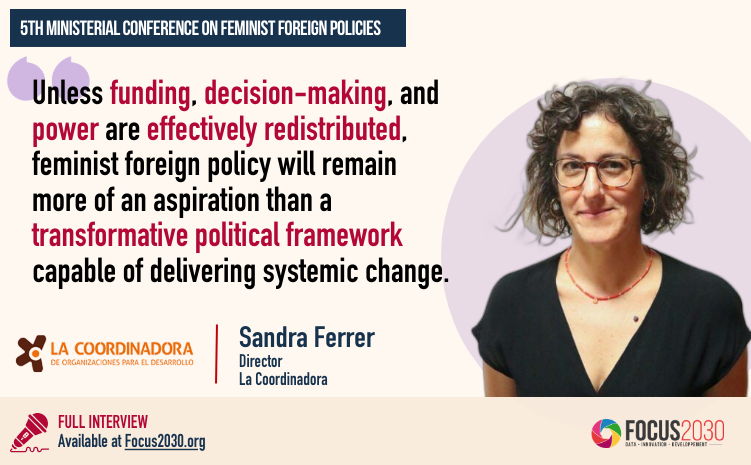
Organizations also called on governments to strengthen direct, flexible, and multi-year funding for feminist movements; protect and reinforce the UN architecture for gender equality; institutionalize permanent consultation mechanisms with civil society organizations; and ensure greater coherence between feminist commitments and policies related to trade, security, migration, climate, and international cooperation.
They further stressed the need to combat militarism, extractivist practices, anti-rights movements, disinformation, and digital violence targeting human rights defenders and feminist organizations.
These recommendations were presented during the ministerial conference by civil society representatives. Their message emphasized that the credibility of feminist foreign policies depends on their ability to translate political declarations into actions that are implemented, funded, and evaluated before the next ministerial conference, scheduled to take place in Morocco in 2027.
Media Coverage
The conference received extensive media coverage in Spain. Below is a selection of articles and broadcasts dedicated to the 5th Ministerial Conference on Feminist Foreign Policies.
- El Diario, June 1, 2026: “¿Existe la política exterior feminista? Estados y sociedad civil se unen para hacer diplomacia frente a la reacción ultra”
- RTVE, June 1, 2026: “Cada vez que se llena una sala de mujeres, el mundo cambia: el movimiento feminista global toma la AECID”
- EFeminista, June 1, 2026: “La cumbre de política exterior feminista reúne en Madrid a más de 700 personas de todo el mundo”
- Infobae, June 1, 2026: “La cumbre de política exterior feminista de Madrid reunirá a 700 personas de todo el mundo”
- EFeminista, June 2, 2026: “La ONU y España reclaman una política exterior feminista contra recortes y por la paz y democracia”
- RTVE, June 2, 2026: “V Conferencia de Política Exterior Feminista: El feminismo está ganando y eso genera reacción”
- Cadena SER, June 2, 2026: “Éléonore Caroit, ministra delegada de Asuntos Exteriores de Francia: Cuando hay mujeres diplomáticas, se llega más fácilmente a tratados de paz”
- PressDigital, June 2, 2026: “Albares carga contra los reaccionarios: Odian la igualdad de género porque es la base de la democracia”
- Infobae, June 2, 2026: “Albares urge a una política exterior feminista para un mundo pacífico y democrático”
- El País, June 2, 2026: “Los ataques contra las mujeres no están aislados. Son parte del ataque contra la democracia”
- Infobae, June 3, 2026: “Albares defiende que el feminismo es una cuestión de todos y es la causa más justa”
- Diario Siglo XXI, June 3, 2026: “Redondo llama a tejer alianzas feministas ante la encrucijada internacional frente al modelo de la violencia”
- RNE, June 6, 2026 broadcast: “Política exterior feminista”
- El País, June 7, 2026: “Diene Keita, directora del Fondo de la Población de la ONU: Cada día mueren 800 mujeres por causas prevenibles del embarazo y el parto”
- EFeminista, June 9, 2026: “Belén Sanz, ONU Mujeres: La paz es el mayor nivel de garantía de protección que podemos dar a las mujeres”
- EFeminista, June 11, 2026: “Frente a la ofensiva antiderechos sexuales y reproductivos, expertas reclaman blindar la diplomacia feminista”
This interview is part of the special edition “5th Conference on Feminist Foreign Policies: Building Peace and Democracy”
Explore this special edition for key facts and figures, expert interviews, analyses, and resources on the 5th Ministerial Conference on Feminist Foreign Policies, financing gender equality, and advancing rights, peace, and democracy.
Read the special edition