Contact

  • Français
  • Español
  • Analysis

    Understanding development aid (an overview)

    Official Development Assistance (ODA) is an essential public policy for meeting the Sustainable Development Goals, and alleviating poverty for millions of people around the world.

    Despite this, ODA is one of the least-well known or understood of public investments. This overview offers a brief history of commitments on development aid, its aims and methods, and what makes up our aid budgets.

    You will also find the latest figures available on the amounts and breakdown of aid provided by the most frequently-referenced group of donor countries, members of the Development Assistance Committee of the OECD.

    Aid developed as an instrument to support poverty-stricken countries after the second world war, and became a definitive part of government policy with the creation of the OECD Development Assistance Committee (DAC).

    But the use and objectives of aid in international policy have been fluid over time, as has its popularity. In the 1990s came the phenomenon of “aid fatigue”, followed by renewed interest and enthusiasm by the 2000s with the UN’s first-ever development framework, the Millennium Development Goals (MDGs). These were a set of goals which set out to inspire specific action on international poverty. They were updated by the Sustainable Development Goals (SDGs) in 2015, a framework which sets out 17 goals on international development, governance and climate change, which the world is due to meet by 2030.

    In 2025, the DAC OECD members provided 174 billion dollars in total aid, double the levels of 2000. But though this sounds like a substantial increase, it is actually fairly modest, ODA spending representing an average of only 0.26% of Gross National Income (GNI). As a comparison, an informal objective for defence spending in NATO is 3% per member state.

    Today, only four countries have met the UN international commitment, agreed back in 1970, to provide 0.7% of their GNI in aid.

    To learn more
  • Understanding Official Development Assistance (in French) - Focus 2030
  • Increase of Development Aid in 2020
  • ALSO READ

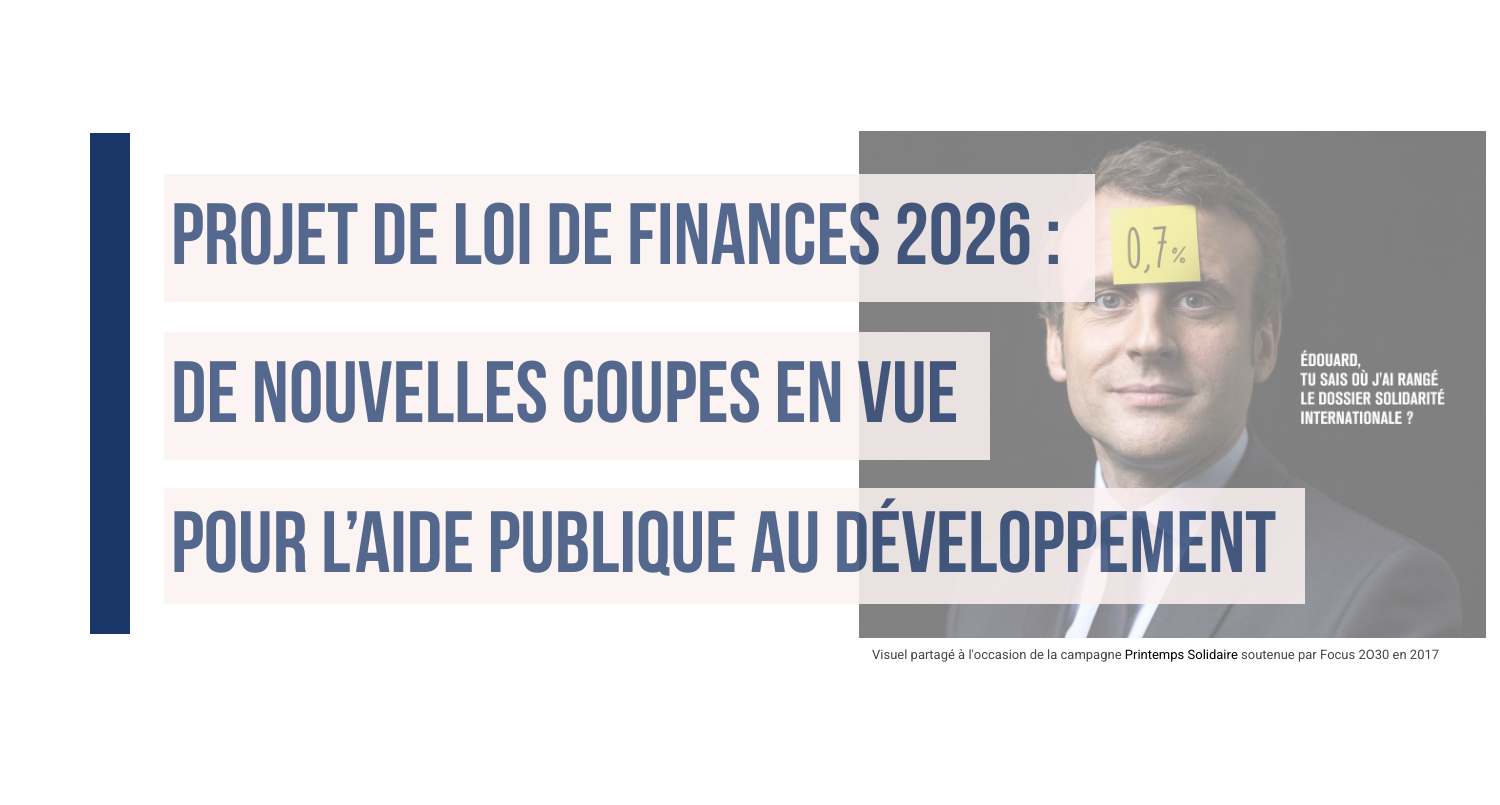
    2027 Budget Bill: France’s official development assistance budget once again faces a potential cut of 300 million euros
    Development financing - 11 August 2026

    2027 Budget Bill: France’s official development assistance budget once again faces a potential cut of 300 million euros

    After five successive cuts in less than two years, France’s official development assistance budget could fall again in 2027. According to the spending ceilings set by the Prime Minister, funding for the Official Development Assistance budget programme would be reduced to €3.3 billion, €300 million less than 2026 Since 2024, funding for this programme would […]
    Official Development Assistance: The Trend in Budget Cuts in France
    News - 01 August 2026

    Official Development Assistance: The Trend in Budget Cuts in France

    A few months after a first setback in official development aid, the French government has announced a new budget cut for 2024. Analysis.
    Development Financing - 22 June 2026

    G7 2026: A summit marked by consensus but without major progress on development issues

    During its meeting in Évian-les-Bains from June 15 to 17, 2026, under the French presidency, the G7 issued three declarations related to global health and development issues, focusing on international partnerships, the response to the Bundibugyo Ebola outbreak, and the fight against cancer. These declarations focus on blended finance, private-sector engagement, and international health cooperation. […]
    Gender equality - 18 June 2026

    Feminist Foreign Policies: Key Takeaways from the 5th Ministerial Conference in Madrid

    Held in Madrid on June 2 and 3, 2026, the 5th Ministerial Conference on Feminist Foreign Policy brought together approximately 700 participants, including representatives from around 60 countries and 140 civil society organizations. The 28 signatory states to the final political declaration linked gender equality, democracy, peace, human rights, and accountability, in a context marked by conflicts, democratic setbacks, and anti-rights movements.
    Gender equality - 17 June 2026

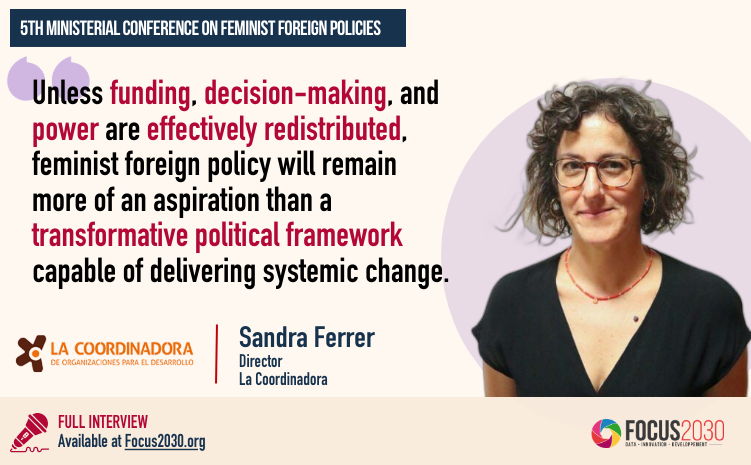
    Interview with Sandra Ferrer, Director of la Coordinadora, on the Fifth Ministerial Conference on Feminist Foreign Policies.

    As civil society organizations face growing restrictions and funding cuts worldwide, Sandra Ferrer examines the role Feminist Foreign Policy can play in protecting civic space, supporting feminist movements, redistributing power and resources and advancing more equitable and inclusive forms of international cooperation.
    G7 - 15 June 2026

    G7 France 2026 : focus on development matters, key challenges, debates and emerging priorities

    In 2026, France holds the presidency of the G7, with the Heads of State Summit scheduled to take place in Evian from June 15 to 17. Keep up with the latest news.