3 questions to Guillaume Gouffier Valente, Deputy and Vice-Chairman of the French National Assembly’s Delegation for Women’s Rights
Published on 05/03/2024.
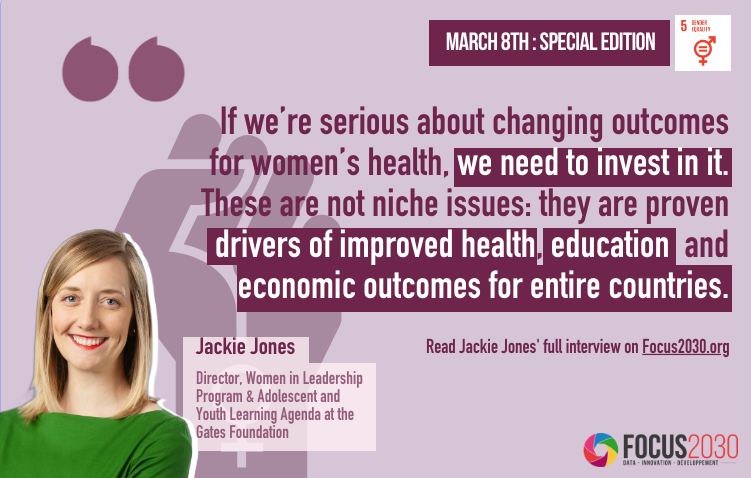
| In the run-up to March 8, International Women’s Day, and as part of its special edition on the state of inequality in the world in 2024, Focus 2030 wants to put forward the stakeholders who try to achieve gender equality on a daily basis. |
Interview with Guillaume Gouffier Valente, Deputy and Vice-Chairman of the French National Assembly’s Delegation for Women’s Rights
Focus 2030 : Le texte inscrivant « liberté garantie aux femmes » d’accès à l’interruption volontaire de grossesse dans la Constitution française a été adopté le lundi 4 mars par le Sénat. Dans quelle mesure estimez-vous que cette initiative pourrait envoyer un signal fort au reste du monde tout particulièrement à un moment où les droits des femmes à disposer de leur corps font débat dans de nombreux pays ?
Guillaume Gouffier Valente : This is now a world premiere ! With the revision of our Constitution definitively adopted on Monday, March 4, 2024, we have elevated the right to abortion to the status of a fundamental freedom, a liberty that not only strengthens the protection of women’s rights but also, more broadly, our democracy ! At a time when women’s rights are under attack worldwide, including in Europe and France, where anti-choice rhetoric is proliferating, and regressions have accumulated in many states over the past years, the recognition of the freedom to undergo an abortion in our Constitution shows a strong universal message to the world and to future generations. We send a simple message : France is and will remain alongside all those who fight for women’s rights and equality worldwide! And we will continue this fight at the European Union level with our commitment to enshrine the right to abortion in the Charter of Fundamental Rights and in all international bodies.
Focus 2030 : You are going to participate to a delegation, with many French parliamentarians, during the upcoming session of the Commission on the Status of Women in New York from March 11 to 22 (CSW 68). This session will focus on the theme of financing and strengthening institutions to achieve gender equality. Could you provide an overview of the positions that French parliamentarians and the French government plan to defend on this occasion ?
Guillaume Gouffier Valente : Our participation this year is unprecedented in scope. We will be a delegation of around fifteen French parliamentarians attending the 68th CSW. I cannot speak for the government and will, therefore, limit my remarks to the messages we will convey as parliamentarians. This gathering is particularly important for us. Firstly, a few days after the recognition of the freedom to resort to abortion in our Constitution, we will be there to convey a message in defense of the right of all women to control their bodies as they see fit and, fundamentally, to live their lives freely. The question before us now is how to make this progress a useful tool for all those advocating for the legalization and access to the right to abortion worldwide. This topic will, of course, be at the heart of our discussions this year.
We will also have two other major objectives. Firstly, we will engage with UN agencies, civil society actors, and parliamentarians from other countries on the importance of incorporating sexual and reproductive rights and health policies into the construction of tools for international cooperation and human development. Secondly, we will discuss the strengthening of the construction of our feminist diplomacy by developing ties with other states that share this ambition and civil society actors involved in its development and implementation every day on the ground. On this issue, our discussions will primarily focus on two questions: how to define a real lasting legislative framework for feminist diplomacy, and how to accelerate the effective realization of the feminist criteria we have introduced into our public development aid policy. .
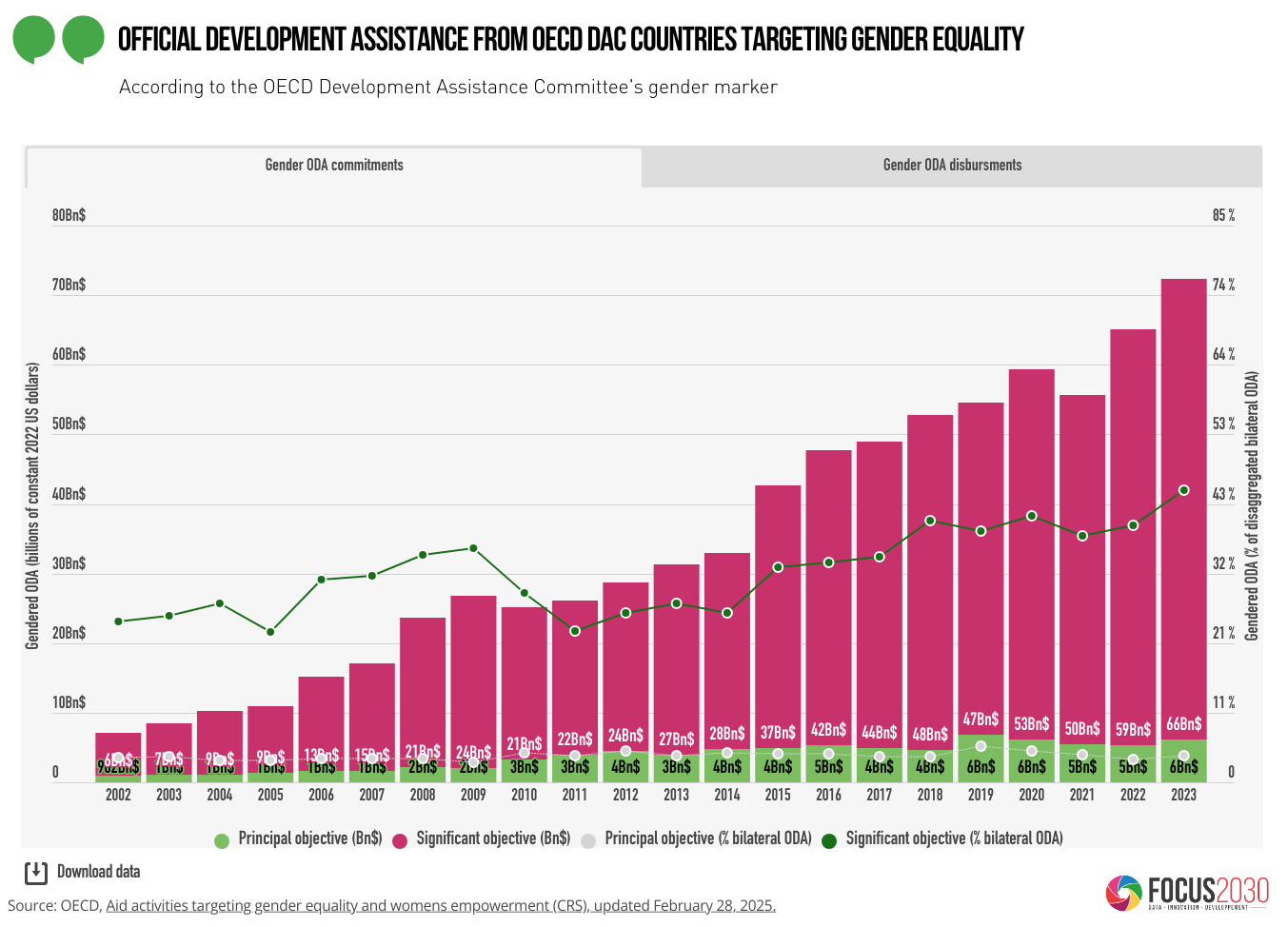
Focus 2030 : Under the law of August 4, 2021, unanimously adopted by all political groups, France has pledged that at least 75% of its bilateral official development assistance (ODA) will be devoted to gender equality as its objective (main or significant) by 2025. However, according to the latest available OECD statistical data, France has allocated only 50% for this purpose. Additionally, France has delayed the achievement of the 1970 goal to allocate 0.7% of GNI to ODA by 5 years, resulting in an estimated reduction of 5.3 billion euros in funding that could have supported gender equality worldwide. As a legislator, how do you interpret this change of position ?
Guillaume Gouffier Valente : I wouldn’t characterize it as a “change of position.” We must still acknowledge the significant progress initiated by the President in this regard. While the budgetary trajectory of our official development assistance had been stagnant for decades, we took a bold step forward by providing it with an ambitious trajectory and strengthened means. In terms of gender equality, it may be regrettable that progress is not happening fast enough, especially in our bilateral projects. However, I note that our multilateral commitments align with these goals, particularly in the context of our contributions to global health, education, and the United Nations. I hope that the new feminist diplomacy strategy to be announced soon will enable us to accelerate and strengthen this commitment, which should be integrated into all our projects, whether in human development or humanitarian action. I had specifically called for vigilance in maintaining crucial grants to feminist NGOs during the recent crisis in Niger. On these issues, our role as parliamentarians is to monitor, question the government, and initiate information missions if necessary.
As we are facing a tangle of crises that exposes already vulnerable populations, and that does not only affect countries thousands of kilometers away, I want to warn that our action and our commitments are in danger.
We must go further on two aspects in my view. Firstly, the programming law we voted on in 2021 is reaching its deadline this year, and we must plan a new programmatic text to ensure our funding and anchor our objectives. We cannot afford a stalemate, and without it, our action is jeopardized. Secondly, we must enhance the democratization of sustainable development goals and explain to our fellow citizens that the world is a village. If we do not protect the entire planet, we will not protect ourselves.
In this regard, the recent announcement by the Minister of Economy and Finance of a cut in the official development assistance (ODA) budget is particularly concerning. We cannot be a country that closes itself off, and we must keep in mind that ODA is not an expenditure far removed from our citizens that we have already increased too much. If we strengthen it and respond to the world’s challenges, especially in terms of gender equality, access to health, and combating climate change, all French people will live better because the world will be better. This is the vision I advocate as a parliamentarian, and around which, I believe, we must collectively mobilize.
NB: The opinions expressed in this interview do not necessarily reflect the ideas of Focus 2030.