3 questions to Jackie Jones, Director of the Women in Leadership Program & Adolescent and Youth Learning Agenda at the Gates Foundation
Published on04/03/2026.
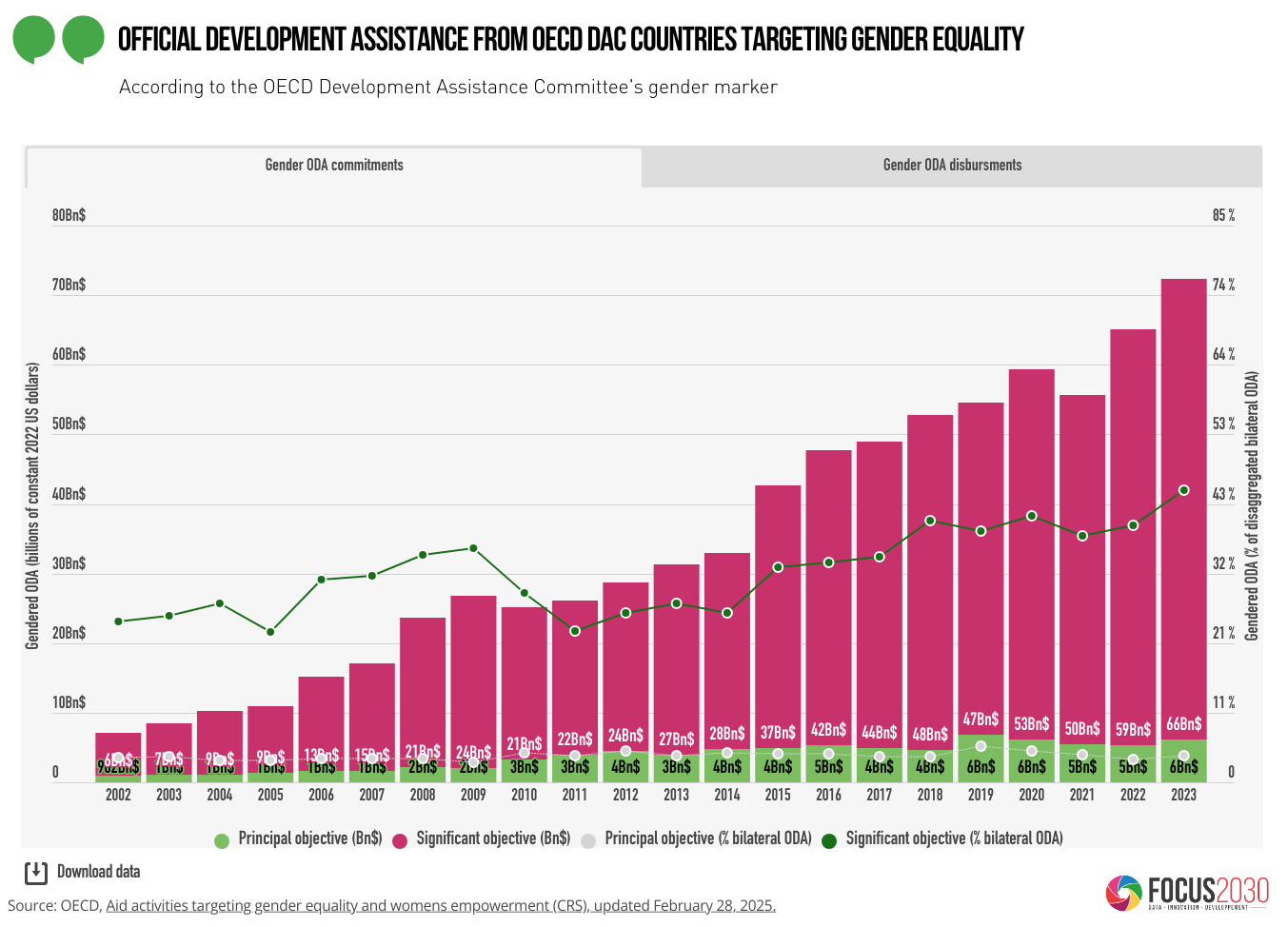
| As March 8 and CSW70 approach, Focus 2030 turns the spotlight on the state of gender inequality worldwide, against a backdrop of sharp cuts to official development assistance and mounting attacks on the rights of women and sexual and gender minorities. At this critical juncture, Focus 2030 brings together data, key facts, campaigns, and expert voices to assess the progress made through these partnerships and the challenges that lie ahead in the fight for equality. Read our special edition. |
Interview with Jackie Jones, Director of the Women in Leadership Program & Adolescent and Youth Learning Agenda at the Gates Foundation
Focus 2030: Has progress on maternal mortality truly stalled? What’s driving the slowdown?
Jackie Jones: The recent stall in global maternal mortality is deeply concerning, not because progress was inevitable, but because it was hard-won. For more than two decades, steady investments in skilled birth attendance, expanded primary care, and new technologies, alongside political commitment, helped drive meaningful declines. Since 2016, however, that momentum has slowed. What’s important to highlight is that the trend is not universal. Some countries in South Asia, for example, have continued to reduce deaths. At the same time, progress has plateaued across much of sub-Saharan Africa and in fragile or conflict-affected states.
This slowdown reflects a shift from health access challenges to systems challenges. For example, many countries succeeded in increasing facility-based deliveries, but survival now depends increasingly on the quality of care inside those facilities. Preventing maternal deaths requires functioning referral systems, reliable blood supplies, emergency obstetric surgery, respectful maternity care, and well-supported midwives—elements that remain unevenly distributed.
At the same time, new pressures are compounding old ones. Climate shocks, conflict, and reductions in foreign aid from donor governments are disrupting health systems. Financing is key and progress in the highest burden countries will require sustained domestic investment and political will as well as new financing mechanisms like the Global Activator Network, which is bringing together public, private, and philanthropic funding for maternal health.
At the Gates Foundation, we’re committed to reducing preventable maternal and newborn deaths and are doubling-down on our grantmaking to fund proven solutions for low-resource settings.
Maternal mortality is not only a health indicator; it is a measure of how societies value women’s lives. Where women lack access, control, agency mortality rates stagnate. Reversing this trend will demand political will, equity-focused investment, and a renewed commitment to dignified, high-quality care for every woman, everywhere.
Focus 2030: What systemic shifts are needed to align “Global South” mortality rates with the “Global North” by 2045?
Jackie Jones: Aligning maternal and child mortality rates globally by 2045 is an ambitious and necessary goal. It signals something profound: that where a woman or child is born should not determine whether they live.
Achieving mortality rates that are on par with the Global North will require structural transformation—not marginal adjustments. First and foremost, countries must invest in resilient primary health systems anchored in high quality and equitable care. Every facility that provides maternity care must be equipped to manage emergencies, with trained midwives, referral systems, surgical capacity, and reliable supplies.
Again, financing will be critical. Countries must gradually increase domestic investment to build sustainable systems beyond donor cycles. This means elevating maternal, newborn, and child health within national budgets, not as discretionary social spending, but as core economic infrastructure.
Innovation has a role to play, particularly when it centers equity. Heat-stable medicines, point-of-care diagnostics, telehealth for remote consultations, digital supply-chain tracking, and locally manufactured commodities can expand reach. But technology alone cannot solve structural inequity. Implementation, governance, accountability, and an understanding of local cultural contexts and social norms that influence health-seeking behavior and decision-making matter just as much.
Finally, we must recognize that maternal and child survival is shaped far beyond clinic walls. Girls’ education, nutrition, social protection, climate resilience, and gender equality are survival strategies.
Focus 2030: How do we close the unmet need for contraception?
Jackie Jones: The fact that more than 250 million women worldwide who want to avoid pregnancy still lack access to contraception is not a failure of technology, it is a failure of equity. Family planning is one of the most powerful tools we have to reduce maternal mortality, advance girls’ education, and expand women’s economic participation. Yet access remains uneven and, too often, fragile.
Women need access to a full range of contraceptive options, long-acting reversible methods, short-acting methods, emergency contraception, and self-care technologies, supported by reliable supply chains and trained providers.Contraceptive choice matters because women’s lives are not uniform; contraceptive needs shift across adolescence, postpartum periods, and later adulthood.
Integration of services offers powerful opportunities. Providing contraception during postpartum visits, immunization appointments, HIV services, and community outreach can dramatically increase uptake.
We need to continue to work on how family planning is talked about, acknowledging that every community and culture is different. To shift both norms and behaviors, we need to engage men as well as lean on faith leaders and community influencers who can reduce stigma and misinformation. Misinformation and disinformation are now major barriers to contraceptive uptake. False claims can be easily amplified by social media, and individual stories of side effects can rapidly erode trust and depress demand. Addressing this requires proactive investment in clear, culturally grounded, evidence-based communication at the local level.
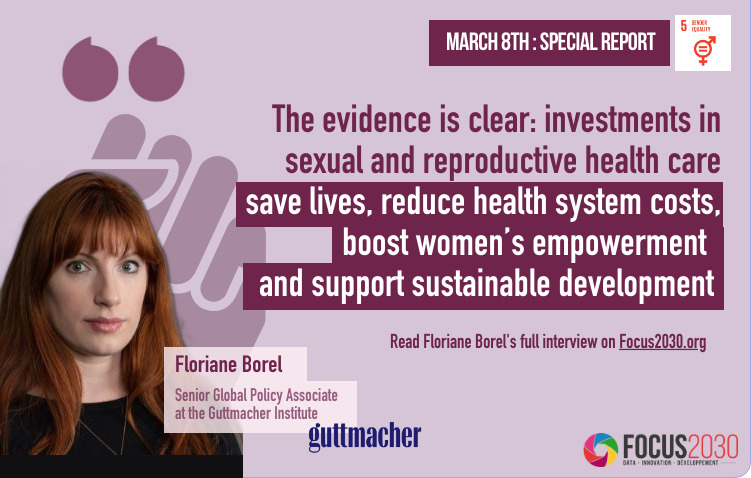
The bottom line is if we’re serious about changing outcomes for women’s health, we need to invest in it. These are not niche issues: they are proven drivers of improved health, education, and economic outcomes for entire countries.
| The opinions expressed in this interview are those of Jackie Jones and do not necessarily reflect the views of Focus 2030. |