International Development Barometer n°5
Published on02/09/2019.
Our 5th International Development Barometer “French views on the G7 and global inequality” is available to download here.
In the run-up to the G7 summit this year, this edition of our International Development Barometer examines what French people know about the G7, in the aim of trying to better understand their views on which should be France’s priorities this year as G7 host.

Formed of some of the world’s seven richest countries (Canada, France, Germany, Italy, Japan, the UK and the US) the G7 represents 45% of global GDP (39 billion USD), 56% of global arms exports, and a quarter of the world’s greenhouse gases.
And yet G7 countries represent only 10% of the world’s population.
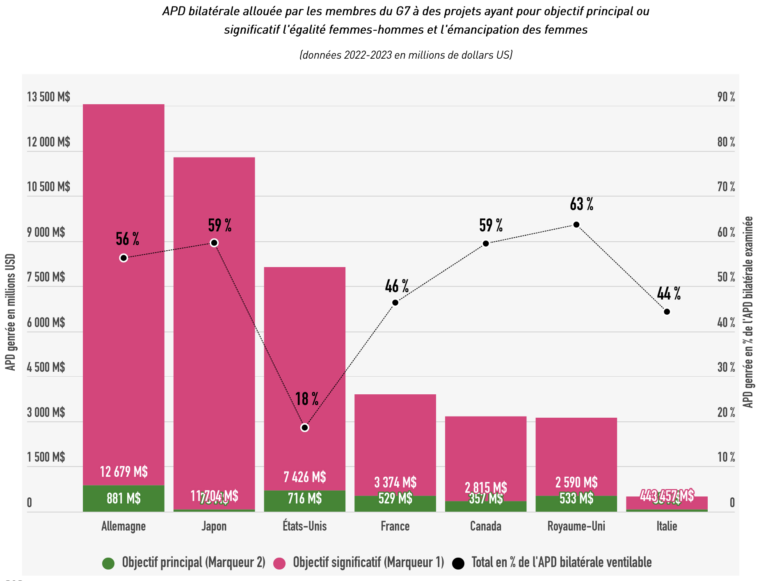
This year, and almost as a mirror of this disparity, France has decided to focus its G7 Presidency on global inequality. Particularly gender inequality, including France’s decision to adopt a ‘feminist diplomacy’ (an idea supported by 64% of French people).
In this latest edition of our International Development Barometer, we find for example that 65% of French people think the G7 should tackle global inequality, in accordance with what President Macron has set as the French G7 Presidency priority in 2019. And yet we also see that French people have their doubts about their politicians’ ability – or willingness – to take action on this subject.
Climate change and taxation of multinational corporations alongside the fight against terrorism and mass killings are identified by respondents as the priority issues which the G7 must tackle this year.
There is also a high percentage of French people who say they are prepared to vote for someone who appears to be motivated on global inequality, or instead to withdraw their vote from a candidate who did not appear to take these questions seriously, or to have the ability to tackle them.
The French G7 is now underway. Only time will tell whether the combination of politicians’ promises and civil society advocacy in 2019 will lead to practical results on global inequality, and provide concrete answers to the global challenges as identified by French citizens in this Barometer.