3 questions to Akihiko Nishio, World Bank Vice President for Development Finance

3 questions to Akihiko Nishio, World Bank Vice President for Development Finance
Written interview received on November 26, 2024.
Focus 2030 : The International Development Association (IDA) is the World Bank’s arm dedicated to supporting the world’s poorest countries. How successful has IDA been since its creation in 1960? What developments have been witnessed?
Akihiko Nishio : The International Development Association has been a remarkable story of transformation since its creation in 1960. Imagine an institution that both provides temporary relief, and helps countries build sustainable economic futures. That’s exactly what IDA has accomplished. Over the decades, 35 nations have graduated from being aid recipients to becoming donors themselves – a testament to IDA’s transformative impact.
The numbers tell an impressive story. Between 2012 and 2023, IDA has touched the lives of billions. More than 1.18 billion people received essential health services, while 117 million gained access to improved water, and 92 million obtained better electricity services. In just the fiscal year 2024, IDA committed $31.2 billion to development projects. Countries like China, India, Korea, and Türkiye have gone from being IDA recipients to donors, demonstrating the IDA’s ultimate success – creating economic self-sufficiency. It’s not just about giving money, but about empowering countries to chart their own economic course. From supporting education and health to building infrastructure and addressing climate challenges, IDA has become a reliable and trusted partner in national development.
Another aspect that makes IDA truly special is its innovative approach: a financing model that turns every donor dollar into $3-$4 dollars of development impact. IDA really is the best deal in development.
In recent years, IDA has also become a leader in addressing global challenges like climate change. Over one-third of its funding is now climate-focused, with a particular emphasis on helping vulnerable countries adapt and build resilience.
Focus 2030 : On December 5 and 6, the 21st replenishment of IDA will end with a conference in Seoul, South Korea. On this occasion, donor countries will be asked to make commitments to finance IDA’s activities over the next three years. What is IDA’s financial ask for this period? To which countries and sectors will these resources be allocated, and according to which criteria? Will they be subject to any form of conditionality?
Akihiko Nishio : The upcoming IDA21 replenishment is an inflection point in global development. We don’t have a target per se but we know the financing needs in the 78 low-income IDA countries are huge.
If we are to have the same financing levels as IDA20, real flat – we are looking at $105 billion. This is not a target but more of a benchmark. We are grateful to countries like Denmark, Spain, Latvia, Norway, Korea and the US that have already announced that they will be increasing their contributions compared to IDA20.
IDA puts countries in the driver’s seat, and financing is allocated based on national needs and priorities. IDA uses a Performance-Based Allocation system that considers each country’s specific needs, growth potential, and poverty reduction capabilities. In the IDA20 cycle, focus is particularly strong on Africa, with about 70% of commitments targeted to the continent.
For IDA21, stakeholders are close to finalizing a policy package that focuses on investments in people, climate, jobs, gender equality, digital transformation and more. Again, these are broad strategic priorities, and individual countries have significant input into how resources are used to meet their specific development needs.
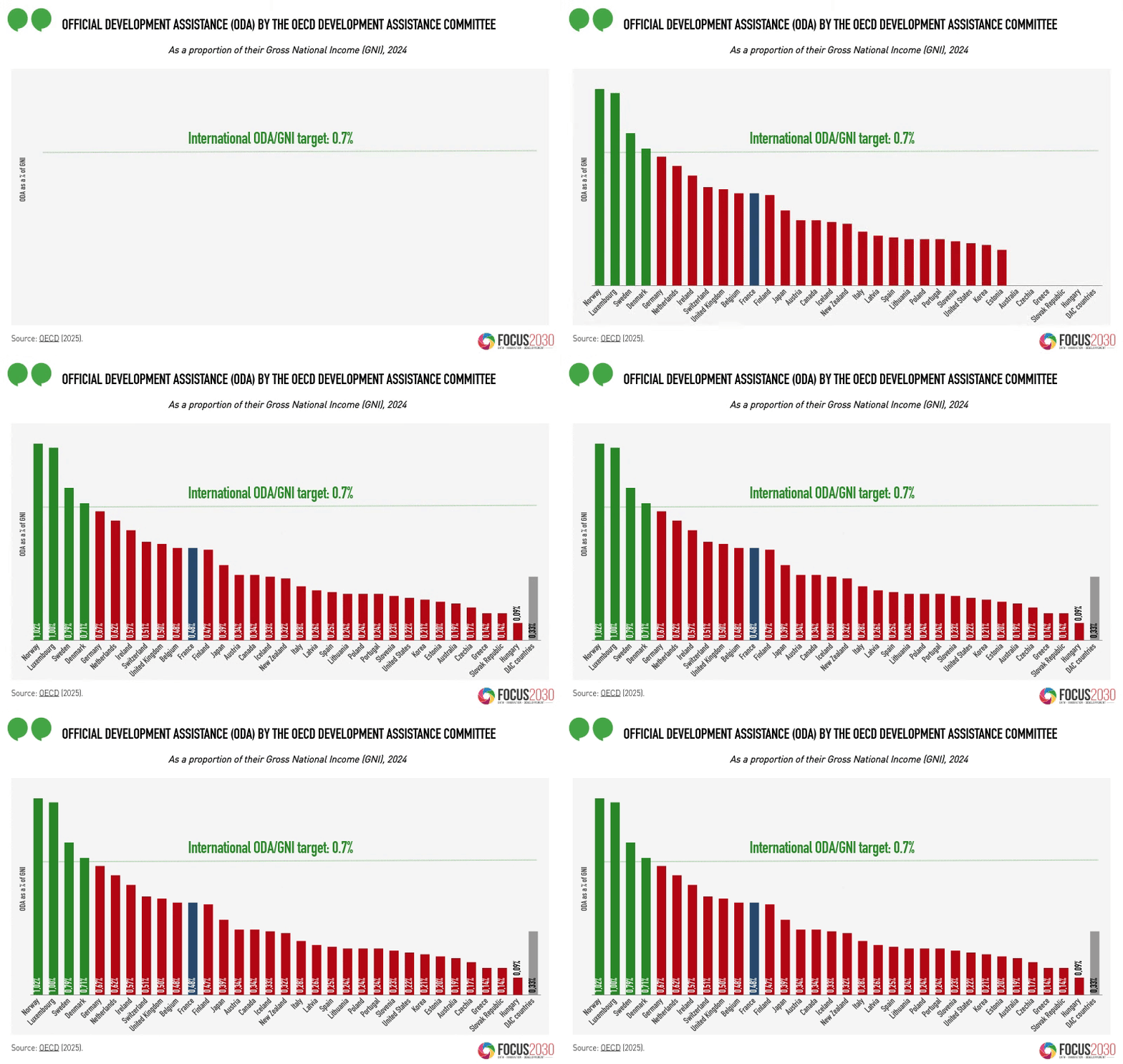
Focus 2030 : World Bank’s President Ajay Banga called on donor countries to make sure the 21st replenishment would be the “largest-ever”. Numerous African Heads of State have called for a mobilization of $120 billion, exceeding the World Bank’s request. At the same time, many donor countries, including France, have announced cuts in their Official Development Assistance. Why are financial needs now higher than ever? What would be the consequences of an unsuccessful replenishment?
Akihiko Nishio : We know the challenges in IDA countries are huge and there is heightened demand for concessional financing. At the same time, we recognize it is a very difficult situation for many donors, especially given that almost all currencies have depreciated against the dollar in the last 3 years.
What makes this moment unique is the recognition that development aid is about more than giving money. It’s about investing in our shared futures and creating sustainable pathways out of poverty that benefit everyone—both people in IDA countries and beyond. So the IDA21 replenishment represents a critical investment that has mutual benefit.
Consider this: Climate change threatens to push over 130 million more into extreme poverty by 2030. Young people are entering labor markets in millions without enough jobs to meet them. Countries are spending astronomical amounts on debt service – nearly half their revenues – which is more than they spend on health, education, and infrastructure combined. Without a robust IDA21, we’re not just talking about reduced aid, but very real and increasing consequences like instability, climate disasters and conflict. And these challenges tend to transcend borders.
The urgency is clear, and as you said, multiple African heads of state have called for a strong IDA. IDA is indeed a strategic investment in global stability. Despite challenges and anticipated cuts from some donor countries, we are grateful for the broad recognition of the critical role IDA plays in addressing development challenges.
|