Reforming the international financial architecture: where do we stand?
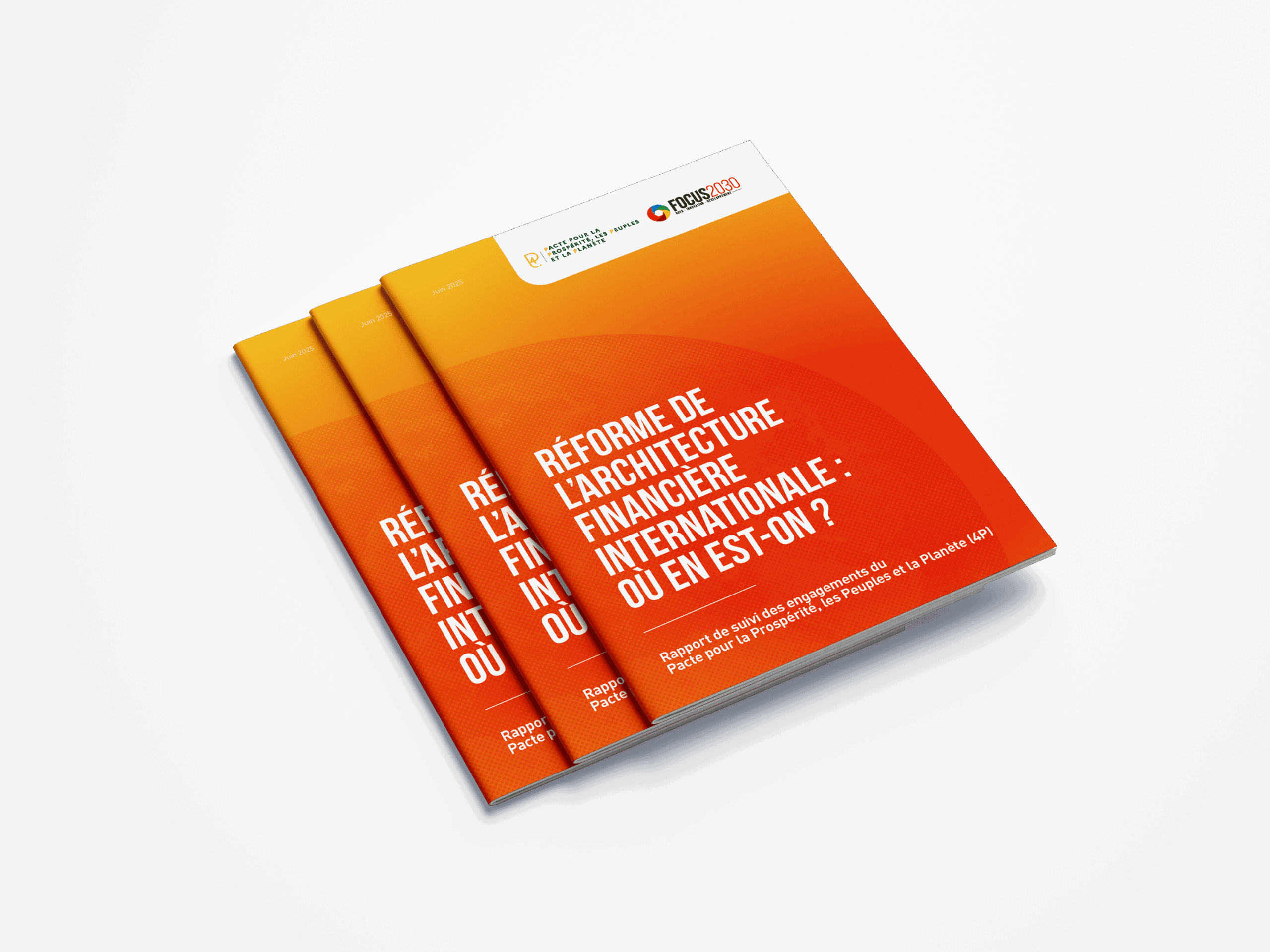
Focus 2030 independently tracks the commitments made at the Summit for a New Global Financing Pact in 2023. Updated on an ongoing basis, this tracker documents progress towards reforming the international architecture for development and climate finance.
“No country should have to choose between fighting poverty and protecting the planet.” Three years after the Summit for a New Global Financing Pact, held in Paris in June 2023, the demand stays in the heart of the debate around the reform of international financial architecture.
The diagnosis has become more acute. Developing countries are facing high borrowing costs, uneven access to development finance, the consequences of climate change, and the burden of debt service. These constraints are reducing their capacity to finance health, education, climate adaptation, food security, and the investments needed to achieve the Sustainable Development Goals.
Available data highlight a major imbalance. 3.4 billion people live in countries where resources are prioritized for debt service rather than health or education. At the same time, the annual financing gap for the Sustainable Development Goals in developing countries is estimated at $4.3 trillion. Based on current climate policies, the world is on a trajectory of +2.8°C of warming by the end of the century.
Pressure is increasing as traditional channels of international solidarity come under strain. In 2025, the OECD Development Assistance Committee recorded a 23.1% decline in official development assistance, totaling US$174.3 billion, its lowest level since 2017 in real terms. This decline follows several years of progress and marks a major setback for the most vulnerable countries, particularly in sectors dependent on concessional financing
The reform of the international financial architecture aims to address these asymmetries. Discussions focus on rebalancing the governance of multilateral institutions, reforming multilateral development banks, mobilizing new sources of financing, aligning investments on the Sustainable Development Goals, and improving debt resolution mechanisms.
The Pact for Prosperity, People and the Planet (4P), launched after the Summit for a New Global Financing Pact, has helped structure this agenda. Created to sustain the political momentum of the Summit, it brings together more than 70 countries and relies on a permanent secretariat hosted at the OECD. In 2026, the 4P is focusing on the links between debt, nature and climate, the mobilization of private capital, and the identification of new sources of financing.
The monitoring work carried out by Focus 2030 assesses the commitments made at the Summit and within the 4P framework, and proposes an associated action agenda. Structured around five areas (reform of international financial institutions, orientation of existing financing, mobilization of new resources, debt restructuring, and mobilization of private capital), it reveals partial implementation. Only one-sixth of the commitments examined have seen significant progress since 2023, linked to the optimization of multilateral development bank instruments and the structuring of coalitions in support of innovative financing. By contrast, half of the commitments show limited progress, while a quarter show no significant progress, or even setbacks.
people live in countries that spend more resources on debt interest payments than on health or education.
Source: UNCTADare missing every year for developing countries to finance the Sustainable Development Goals.
Source: UNCTADof voting rights at the International Monetary Fund are held by G7 countries, which represent seven countries out of 191, or less than 4% of member states.
Source: IMFmore was paid by developing countries in external debt service than they received in new financing between 2022 and 2024.
Source: World Bankthe decline in official development assistance from members and associates of the Development Assistance Committee in 2025.
Source: OECDlow-income countries borrow at rates two to four times higher than the United States.
Source: UNCTADThree years after hosting the Summit for a New Global Financing Pact, France holds the G7 presidency in 2026.
In this role, it aims to bring together G7 members and international partners to identify major global imbalances and address them through coordinated national and multilateral policies.

REFORMING THE INTERNATIONAL FINANCIAL ARCHITECTURE
This tracker records progress, stagnation and setbacks observed since the Summit for a New Global Financing Pact.



OTHER REFORM INITIATIVES
Several parallel frameworks aim to accelerate the transformation of development finance, international cooperation and global financial governance.
Three years after the Summit for a New Global Financing Pact, progress on reforming the international financial architecture remains mixed. Some progress has been made, but its pace, coordination and level of financing remain insufficient given the scale of needs.
Multilateral development banks have launched reforms intended to increase their lending capacity. Tools designed to better take climate risks into account, such as debt suspension clauses and vulnerability analyses, are gradually spreading. The debate on international solidarity taxes has become more structured, while the Sevilla Platform for Action has provided an operational expression for part of the commitments made at the Fourth International Conference on Financing for Development.
These advances do not yet fundamentally transform existing balances. The governance of international financial institutions remains largely dominated by countries that retain a significant share of decision-making power. Private capital can contribute to meeting investment needs, but it cannot replace concessional finance, particularly in social sectors that are structurally less profitable.
Nor can private capital, on its own, offset the decline in concessional resources and the rise in financing costs. At the same time, debt restructurings remain lengthy and uncertain, increasing the risks of liquidity crises for many countries. The current architecture therefore continues to place a significant share of the costs of crises on the most vulnerable countries.
A major break in the recent period lies in the historic contraction of official development assistance. Over two years, as financing needs have increased, OECD Development Assistance Committee countries reduced their official development assistance by 28%, the largest decline ever recorded.
This contraction weakens trust between countries, undermines concessional instruments, reduces the room for manoeuvre of multilateral organisations and forces many actors to turn, where possible, to more costly financing solutions that are difficult to sustain over the medium term.
At the same time, the international context is becoming more constrained. The evolution of the United States’ position, rising geopolitical rivalries and the questioning of several multilateral spaces raise concerns about the capacity of established economic powers to play a leading role in producing and financing global public goods.
This evolution is fuelling demands for rebalancing from developing and emerging countries, in governance, taxation, debt and economic sovereignty.
The decline in official development assistance and the multiplication of initiatives — Accra Reset, Future of Development Cooperation Coalition, Sevilla Platform for Action, 4P coalitions — illustrate both the limits of the traditional model and the search for new frameworks for action.
These dynamics can open useful pathways if they strengthen countries’ capacity to act, mobilise additional resources, reduce power asymmetries and better connect public, private, domestic and international finance. They may also add complexity if they are not accompanied by stronger coordination, meaningful inclusion, transparent accountability processes and rigorous measurement of results.
The challenge in the coming months does not lie in multiplying commitments, but in implementing them effectively. Reforming the international financial architecture cannot be limited to shared language: it must translate into finance that is more predictable, more accessible and better aligned with the development priorities of the countries concerned, without increasing their financial, environmental or institutional vulnerability.
Four years before the Sustainable Development Goals deadline, geopolitical fragmentation, the acceleration of extreme climate events and the multiplication of conflicts are making reform efforts more complex; they also reinforce their strategic relevance.
The challenge can be summed up in one imperative: transforming a financial architecture inherited from the 20th century into a system capable of financing the priorities of the 21st century fairly.
Methodology
The third edition of the follow-up report examines progress on the commitments made at the Summit for a New Global Financing Pact, held in Paris in June 2023.
The assessment of progress is based on consultations, a document review, official statements and analyses produced by specialised organisations, in order to establish a documented overview of progress since June 2023.
This exercise is an independent assessment conducted by Focus 2030 on the basis of a literature review, interviews and meetings. It does not engage the responsibility of the actors and organisations mentioned.
What does the tracker measure?
The tracker classifies commitments according to their level of progress: notable progress, limited progress, no significant progress or setback. This classification aims to reflect the state of implementation of commitments since the Summit for a New Global Financing Pact.
Which areas are tracked?
The analysis covers reform of international financial institutions, the redirection of finance towards development and climate, the mobilisation of new resources, debt treatment and the mobilisation of private capital.
How are the data updated?
Progress statuses are updated as international milestones take place, official announcements are made, new data are published and information is shared by organisations involved in tracking the commitments.
Which sources were used?
The assessment is based on a literature review, institutional documents, public statements, analyses by specialised organisations, and a series of interviews and meetings with actors involved in discussions on reforming the international financial architecture.
For any update, contact [email protected], Programme Officer for International Financial Architecture Reform at Focus 2030.
GLOSSARY OF ACRONYMS AND CONCEPTS
This glossary defines the main acronyms, institutions, financial mechanisms and concepts mentioned in the tracker.


ALSO READ
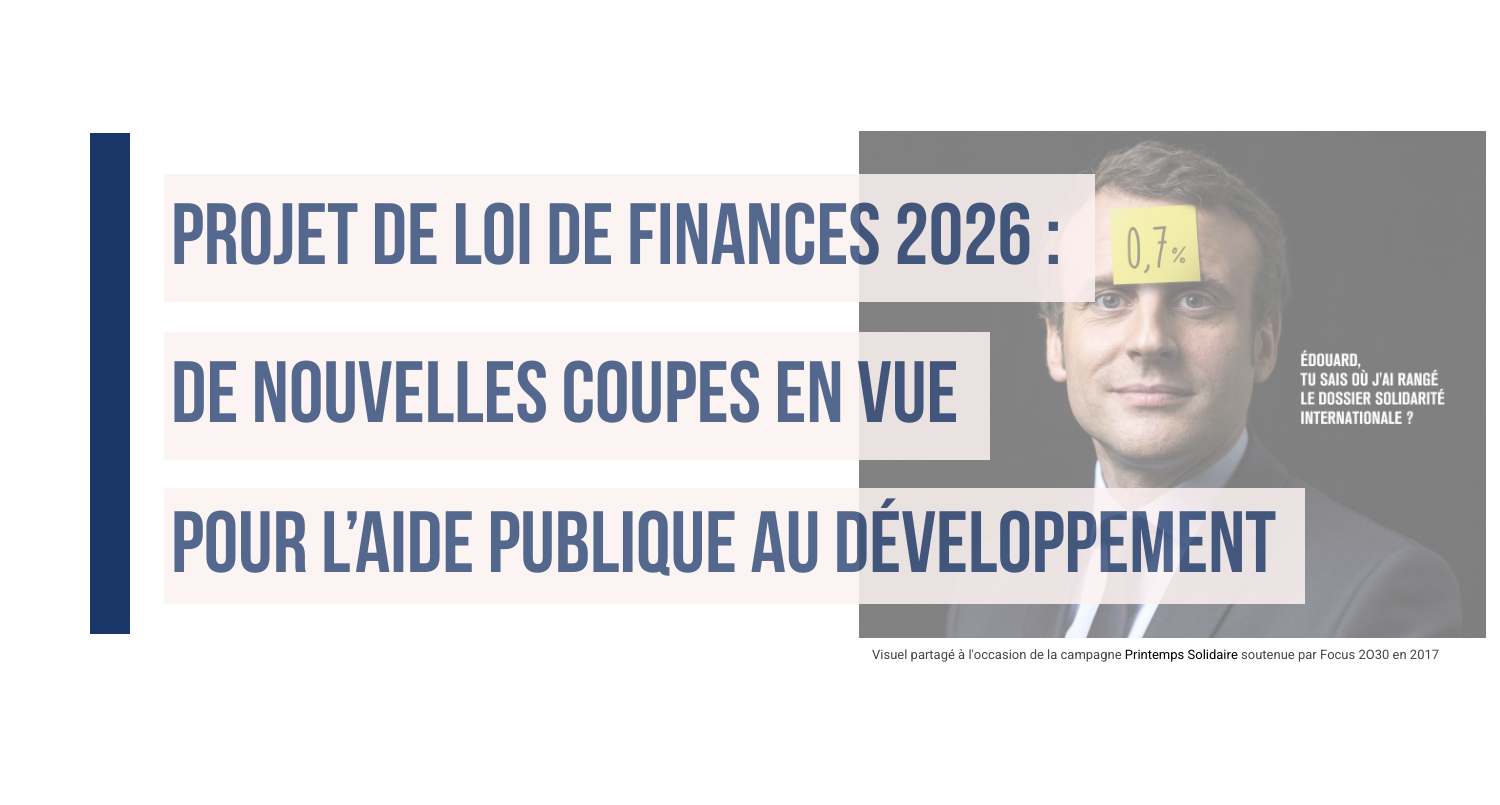
2027 Budget Bill: France’s official development assistance budget once again faces a potential cut of 300 million euros

Official Development Assistance: The Trend in Budget Cuts in France
G7 2026: A summit marked by consensus but without major progress on development issues
G7 France 2026 : focus on development matters, key challenges, debates and emerging priorities
Reforming the international financial architecture: where do we stand?