G7 France 2026: focus on development issues, understanding the challenges, keeping up with the latest news
In 2026, France holds the G7 Presidency. The Summit of G7 Heads of State and Government will take place in Évian from 15 to 17 June 2026, with G7 member countries as well as Kenya, India, Brazil, Egypt and South Korea in attendance.
This sequence runs in parallel with the U.S. G20 Presidency, whose Summit is scheduled to take place on 14 and 15 December 2026 in Miami. It comes in an international context marked by sustained geopolitical tensions, persistent macroeconomic imbalances and a documented increase in financing needs for sustainable development and climate action. Against this backdrop, the ability of international economic governance forums to produce common, operational guidance is a central issue.
The French G7 Presidency therefore opens a sequence of discussions on public policy coordination, the mobilisation of international financing and the role of global public goods. It also raises the question of the role of restricted formats such as the G7 in a fragmented international system, faced with challenges that extend far beyond the scope of its members.
Ahead of this milestone, Focus 2030 is contributing to public debate, informing policy discussions and strengthening dialogue between public authorities, international institutions, civil society organisations and actors, based on factual analysis and data.
Read Focus 2030’s analysis of the Summit conclusions
Focus 2030 reviews the main takeaways from the G7 Summit in Évian, the texts adopted by Leaders and their scope in relation to international solidarity, development and global health issues.
Read the analysis →Leaders’ declarations and calls
The Summit of G7 Heads of State and Government is taking place in Évian from 15 to 17 June 2026. In this context, official documents setting out the G7’s common positions are being progressively published, completed or updated. This page tracks declarations, calls to action and reference texts linked to the priorities of the French G7 Presidency.
Mutually beneficial international partnerships
G7 Leaders reaffirm their commitment to international cooperation on development and investment finance, while calling for reforms to make the development system more effective, catalytic and better aligned with partner countries’ priorities.
- Development finance and concessional resources.
- Debt sustainability and domestic resources.
- Private capital and infrastructure.
Coordinated response to the Bundibugyo Ebola outbreak
G7 Leaders call for a coordinated response to the Bundibugyo Ebola outbreak in the Democratic Republic of the Congo and Uganda, with a focus on containment, health security and international support.
- Contact tracing, testing and community engagement.
- Vaccines, diagnostics and treatments.
- Cross-border preparedness.
The fight against cancer
G7 Leaders reaffirm their commitment to accelerating the fight against cancer through international scientific cooperation, data access, prevention, early detection and access to quality care.
- Paediatric, adolescent and young adult cancers.
- Cancers with poor prognosis.
- Research, innovation and access to care.
Other published declarations and calls
The fight against drug trafficking
Read the declaration →Geopolitical issues
Read the statement →Tackling migrant smuggling
Read the declaration →Securing supply chains for critical minerals
Read the declaration →More balanced, durable and resilient growth
Read the statement →A safer digital space for minors
Read the call →G7 2026: nine texts set out priorities on development, global health, the economy and international security
As the Summit of G7 Heads of State and Government takes place in Évian from 15 to 17 June 2026, several texts have been published before the adoption of the final communiqué. Three declarations directly address development and global health: international partnerships, the response to the Bundibugyo Ebola outbreak and the fight against cancer. Six other texts cover the fight against drug trafficking, geopolitical issues, migrant smuggling, critical minerals, economic growth and online safety for minors.
These documents provide initial indications of the priorities put forward by G7 members and some invited partner countries: reform of development cooperation, mobilisation of public and private financing, global health security, humanitarian coordination, scientific cooperation, economic security, action against transnational organised crime and responses to geopolitical crises.
1. International partnerships more strongly oriented towards investment
The declaration on mutually beneficial international partnerships proposes a shift in the framework for development cooperation. It promotes partnerships based on shared interests, country ownership, accountability, economic sovereignty and the resilience of partner countries.
Official development assistance and concessional financing are presented as strategic instruments, particularly for the least developed and most vulnerable countries. The text also underlines that public resources alone cannot meet all development financing needs.
The declaration therefore focuses on domestic resource mobilisation, transparency in lending practices, debt sustainability, the role of multilateral development banks and the attraction of private capital. It also encourages the use of guarantees, blended finance, risk-sharing instruments and co-financing.
The sectors mentioned include infrastructure, energy, digital systems, critical minerals, food security, health, education, nutrition and food systems.
2. Bundibugyo Ebola: coordinating the health and humanitarian response
The second text concerns the Bundibugyo Ebola outbreak in the Democratic Republic of the Congo and Uganda. The G7 presents it as a regional health crisis and a risk to global health security, in a context marked by the isolation of some affected areas, ongoing conflicts and the limits of available medical tools against this viral strain.
The text calls for stronger international coordination around contact tracing, infection prevention and control, quarantine, laboratory testing, cross-border preparedness, border surveillance and community engagement. It also highlights the development and delivery of adapted vaccines, diagnostics and treatments.
Several financial commitments are mentioned, including more than 370 million U.S. dollars mobilised by the United States for the region, up to 500 million U.S. dollars in additional support for the Ebola response, 650 million U.S. dollars in humanitarian aid for the Great Lakes region, 493 million euros in European Union support and 518 million U.S. dollars mobilised through the Continental Preparedness and Response Plan.
3. Cancer: data, research and access to care
The third text addresses the fight against cancer. It recalls that cancer kills nearly 10 million people each year worldwide and that new cases could increase by 80% by 2050.
The G7 highlights three priorities: strengthening access to international data on paediatric, adolescent and young adult cancers; supporting research on cancers with poor prognosis; and improving access to quality cancer care.
The text calls in particular for greater data interoperability across clinical, genomic and imaging data, improved screening and early diagnosis, and faster translation of scientific advances into clinical practice. It also mentions the potential role of digital technologies, artificial intelligence and quantum research, where these tools are used within an appropriate framework.
4. Security, critical minerals, economic resilience and online protection for minors
The G7 has also published several declarations on international security. They address the fight against drug trafficking, geopolitical issues and migrant smuggling. These texts place emphasis on cooperation between states, information sharing, targeted sanctions against criminal networks and protection for the most vulnerable, including refugees and forcibly displaced persons.
The declaration on critical minerals focuses on securing and diversifying supply chains, reducing dependencies, strengthening transparency and traceability, expanding recycling and cooperating with partner countries. It also refers to the creation of a G7 framework to support resilience and production in critical minerals.
The statement for more balanced, durable and resilient growth addresses risks to the global economy, supply chains, energy, raw materials, global imbalances, reform of international trade, macroeconomic stability and risks linked to emerging technologies.
The call for a safer digital space for minors focuses on online safety for children and young people under 18. It covers safety-by-design platforms, default protection settings, parental control tools, age assurance, content transparency, action against illegal or inappropriate content and the management of risks associated with conversational artificial intelligence.
What is the G7 today?
Created in 1975, the G7 originally brought together the leading advanced economies to coordinate their responses to global economic crises. Today, it includes: Germany, Canada, the United States, France, Italy, Japan, and the United Kingdom, as well as the European Union.
The weight of the G7 in the world today:
The G7 is neither an international organization nor a formal decision-making forum. However, it remains an informal arena for political influence, able to shape economic, financial, and development priorities on a global scale.
Priorities of the French G7 Presidency in 2026: Addressing Global Imbalances
The G7 Summit of Heads of State and Government will take place in Evian on June 15 to 17. G7 member countries and several major emerging countries have been invited to attend. At this stage, the participation of Kenya and India is confirmed, with Brazil and South Korea potentially joining (awaiting confirmation), and other emerging powers may also be involved in the talks.
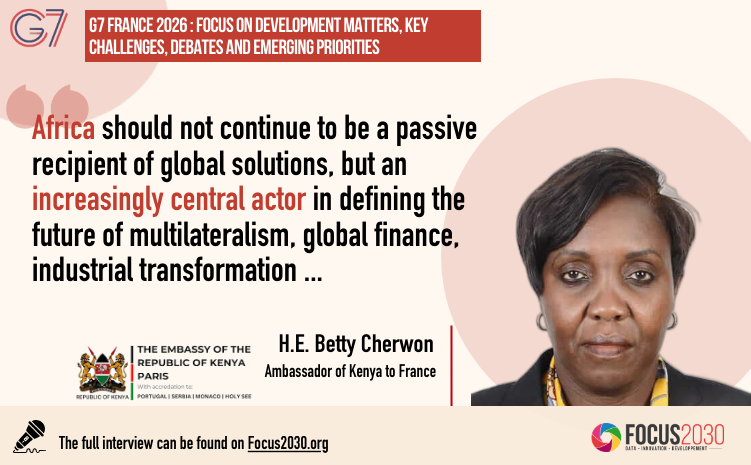
Interview with Her Excellency Betty Cherwon, Ambassador of Kenya to France
Given the polarized political context, the French Presidency has opted for a strategy focused on observations (“shared diagnoses”) rather than an immediate search for binding solutions that could impede negotiations. The aim is to maintain dialogue with all partners, particularly the United States, by identifying areas of convergence (such as aid effectiveness and private sector engagement) while acknowledging the need for compromise on more contentious issues.
The G7 under the French presidency will be organized around 7 “tracks” (negotiation channels): Finance, Development, Foreign Affairs (crises), Trade, Digital, domestic Affairs, and Environment/Energy. Artificial intelligence (AI) and global health have also been identified as major sub-themes.
According to the initial guidelines available, the French presidency of the G7 in 2026 should be structured around two main pillars:
1. Reducing global macroeconomic imbalances
This first pillar, led by the Ministry of Economy and Finance (Treasury), aims to strengthen macroeconomic coordination between major economies in a context of high debt, inflationary pressures, and financial fragmentation.
2. Rethinking the global development framework
The second pillar, led by the Ministry for Europe and Foreign Affairs, will focus in particular on:
- The development of innovative financing (debt-for-development swaps, guarantees, financial mechanisms beyond traditional official development assistance, and moving beyond the simple measurement of ODA to map all net financial flows).
- Targeted support for the most vulnerable countries: taking better account of countries’ vulnerability and fragility (beyond the sole criterion of income) for eligibility for financing.
- Promoting a “win-win” partnership approach and “return on investment.”
- International solidarity mechanisms.
Highlights from the Development Ministers’ Meeting of April 29-30
Following the G7 Development Ministers’ Meeting of April 29-30, a communiqué and four deliverables were published:
- A framework for promoting health sovereignty financing and self reliance;
- A joint statement with Finance Ministers on domestic resource mobilization;
- A statement in support of an ambitious OECD Development Assistance Committee (DAC) review;
- A new G7 approach to economic corridors.
Official Documents from the G7 Development Ministers’ Meeting
The G7 places particular emphasis on mobilizing financing beyond official development assistance (ODA), notably through domestic resources, private capital, blended finance, and public development banks.
Six key priorities shape the communiqué and associated outcome documents:
- Promoting development based on mutually beneficial partnerships.
- Reforming the development architecture, including through a review of the OECD Development Assistance Committee (DAC) (broadening membership, advancing TOSSD, etc.), improving the measurement of financial flows, strengthening donor coordination, and supporting the UN80 Initiative.
- Strengthening domestic resource mobilization, by supporting tax systems, public financial management, budget transparency, and efforts to combat illicit financial flows.
- Supporting health sovereignty and autonomy, through a Framework to promote health sovereignty financing and self reliance, including closer cooperation among multilateral development banks (MDBs), greater mobilization of domestic resources and private capital, and more effective public financial management for health.
- Advancing economic corridors as drivers of regional integration, connectivity, job creation, and private investment mobilization.
- Targeting concessional resources toward the least developed and most vulnerable countries, particularly in the areas of health, education, nutrition, food systems, and crisis prevention.
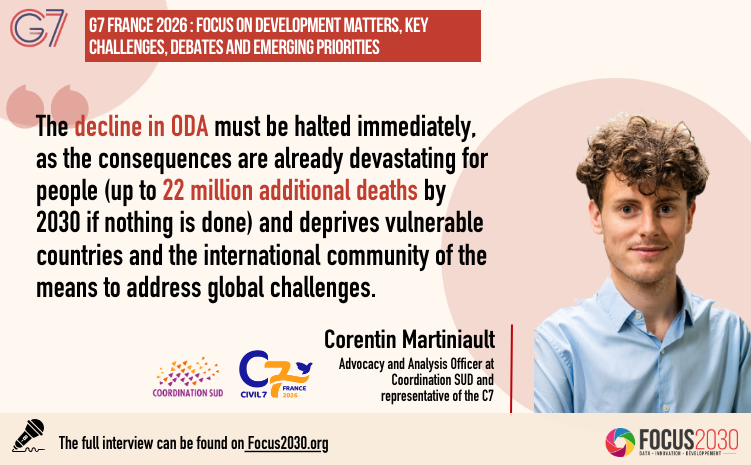
Interview with Corentin Martiniault, Advocacy and Policy Analyst at Coordination SUD and representative of the Civil 7 (C7)
Highlights from the G7 finance ministers’ meeting of may 18-19
Meeting in Paris on May 18-19, 2026, the G7 Finance Ministers and Central Bank Governors issued several statements focused on global economic stability, support for Ukraine, economic security of economies in the face of geopolitical tensions, supply chain disruptions, climate-related risks, cyber threats, and technological transformations in the financial sector.
A communiqué adopted in the G7+ format, following discussions with Brazil, India, Kenya, and South Korea, also highlights the risks to global growth, inflation, and the supply of energy, food, and fertilizers. The G7 calls for reducing global macroeconomic imbalances and strengthening monitoring and surveillance efforts of the International Monetary Fund (IMF) and the Organization for Economic Cooperation and Development (OECD).
In addition, Development and Finance Ministers agreed on a set of common principles to strengthen the mobilization of domestic public resources in partner countries. The statement emphasizes stronger tax systems, more transparent public financial management, efforts to combat tax evasion and illicit financial flows, and improved coordination of technical assistance.
Official Documents from the G7 Finance Ministers’ Meeting
The G7: an opportunity to reform the international financial architecture?
With the 2026 G7 summit approaching, reforming the international financial architecture is emerging as a strategic priority, as part of the follow-up to the Pact for Prosperity, People, and Planet (4P). Initiated by France since the Paris Summit for a New Global Financial Pact, the 4P was explicitly reaffirmed at the Presidential Council for International Partnerships on April 6, 2025, confirming its role as a reference framework for France’s international action. This commitment was also reinforced by President Emmanuel Macron’s statements in Seville at the 4th International Conference on Financing for Development, with the stated aim of promoting the 4P in multilateral forums, particularly within the G7. In this perspective, France intends to use the G7 to contribute to the reform of the international financial architecture, even if the specific terms of its inclusion on the agenda and the level of ownership by other members remain uncertain.
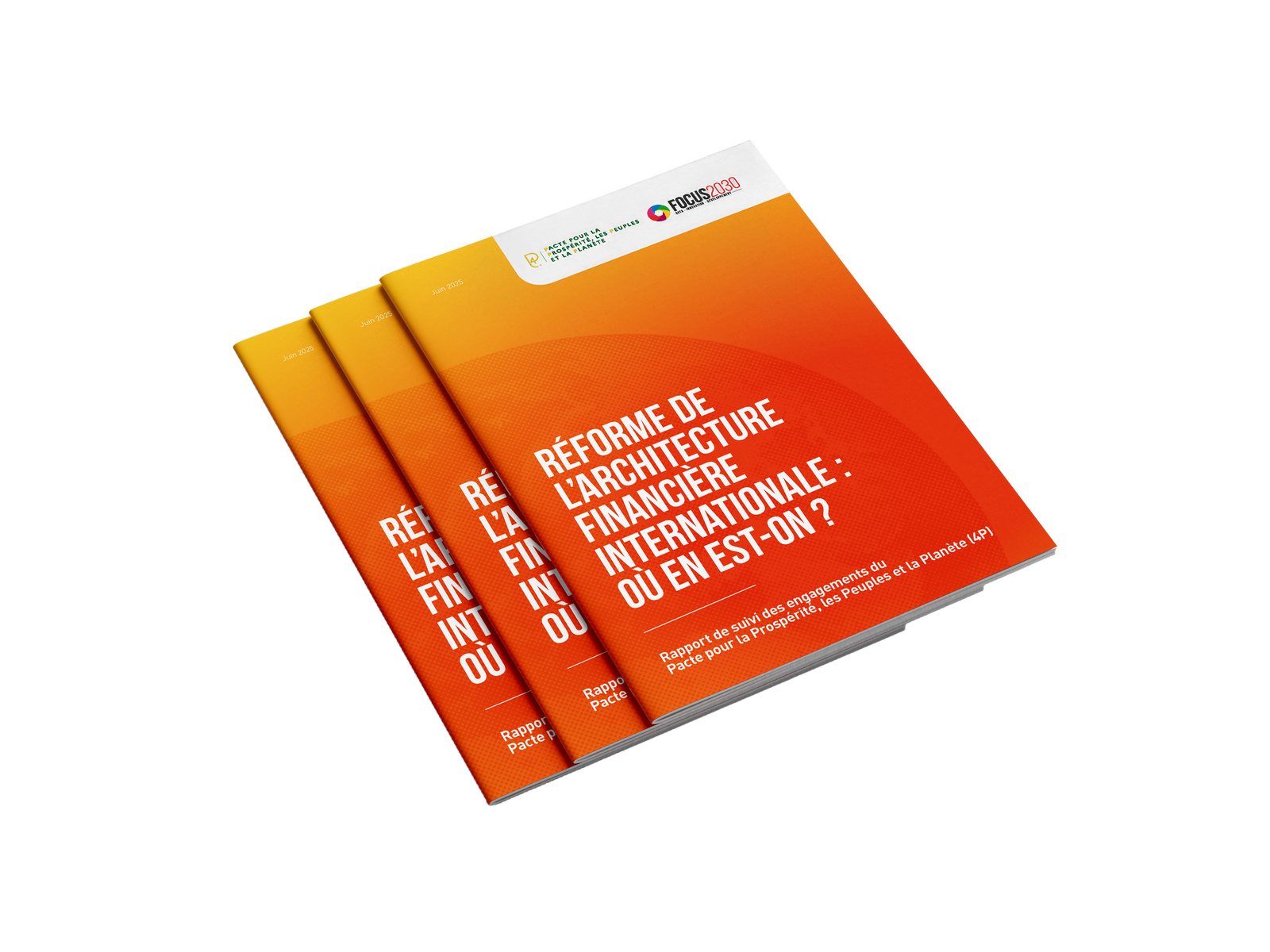
Reforming the international financial architecture: where do we stand?
Focus 2030 tracks progress on the commitments made at the Summit for a New Global Financing Pact. This interactive report documents progress, delays and setbacks in the reform of the international financial architecture for development and climate action.
Access the interactive report →In this context, Focus 2030 is mobilizing a series of governmental and non-governmental partners and continuing its analytical work, which result in the production of an updated version of its report monitoring the reform of the international financial architecture ahead of the G7 leaders’ summit.
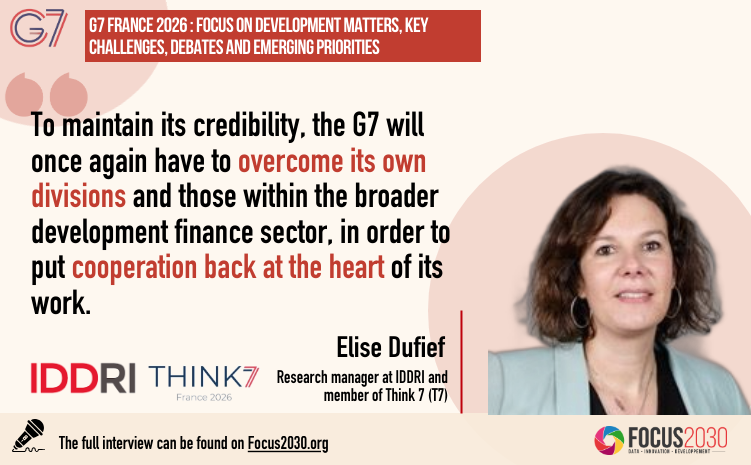
Interview with Élise Dufief, Research Manager at Iddri and member of Think 7 (T7)
G7 engagement groups: the contribution of civil society actors
Officially recognized by the G7, engagement groups are coalitions of civil society actors tasked with formulating policy recommendations for heads of state and government. Organized by key sectors: such as the C7 for civil society, the W7 for women’s rights, or the Y7 for youth. They work in parallel with the official negotiations to influence the final decisions of the Summit. With a view to France’s presidency in 2026, these groups aim to “spur on” the French government and its counterparts and ensure that ambitious political and financial commitments are made to address major global challenges (health, poverty, climate, development financing).
G7 2026 engagement groups
Three spaces linked to development financing
Civil 7 C7
Civil 7 (C7) brings together civil society organisations and actors involved in international solidarity. It is coordinated by Coordination SUD.
The C7 communiqué ahead of the G7 is available on the C7 website.
C7 website Communiqué
Women 7 W7
Women 7 (W7) brings together civil society organisations from G7 countries and developing countries working on the rights of women and girls. It is coordinated by Equipop, CARE France, Plan International, Le Planning Familial and IPPF.
W7 website
Think 7 T7
Think 7 (T7) brings together think tanks. It is coordinated by Iddri and ECFR.
The nine solution papers published ahead of the G7 are available on the Iddri website.
T7 website Iddri publicationsOther engagement groups
Business 7
Business 7 (B7) is the business community platform linked to the G7. It is coordinated by MEDEF.
B7 websiteLabour 7
Labour 7 (L7) represents the interests of workers and employees. It is coordinated by the Trade Union Advisory Committee to the OECD.
L7 websiteScience 7
Science 7 (S7) promotes, supports and protects scientific research. It is coordinated by the French Academy of Sciences.
S7 websiteUrban 7
Urban 7 (U7) brings together local authorities. It is coordinated by France Urbaine.
U7 websiteParliamentary G7
The Speakers of Parliament of G7 countries also meet in the framework of the “Parliamentary G7”, coordinated by the French National Assembly.
Parliamentary G7 websiteG7 of Lawyers
The G7 of Lawyers promotes the rule of law, access to justice and judicial independence. It is coordinated by the French National Bar Council.
G7 of Lawyers websiteYouth 7
Youth 7 (Y7) brings together young people around issues related to global governance. It is coordinated by Open Diplomacy.
Y7 websitePride 7
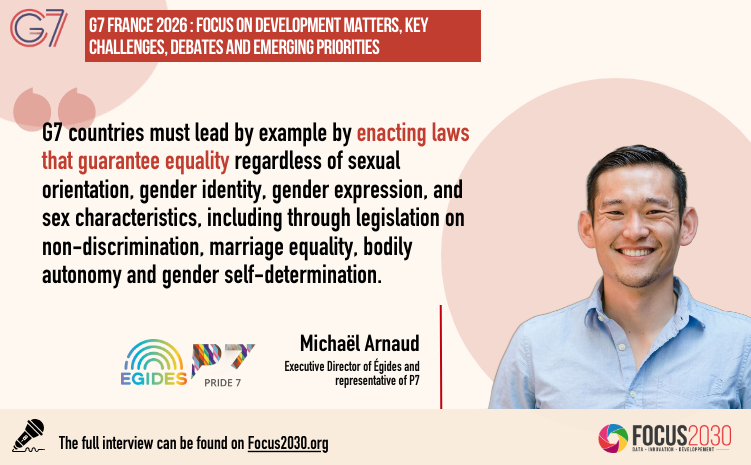
Pride 7 (P7) promotes and protects the rights of LGBTQIA+ people. It is coordinated by Égides.
P7 websiteUniversity 7
University 7 (U7+) brings together universities. It is coordinated by Sciences Po Paris.
U7+ websiteG7 Labeling
New for 2026: “G7 Labeling.” France is introducing a system enabling civil society actors (NGOs, think tanks, local authorities, businesses) to have their initiatives recognized. Subject to validation via a dedicated platform and compliance with an ethical charter, events aligned with the Summit’s priorities will be able to obtain the official “French Presidency of the G7” label. This status allows the use of the official visual identity, institutional recognition, and increased visibility within the presidency’s program.
The citizens of member countries support international cooperation, yet demand more transparency
As the G7 summit in Évian approaches, which will take place from 15 to 17 June 2026, the AFD–IFOP survey of 7,000 adults across the seven member countries sheds light on public opinion towards international cooperation. While 75% of those surveyed support the principle of aid to developing countries, the results also highlight a limited understanding of official development assistance: only 2% correctly identify the proportion of the national budget allocated to it. Between support for multilateralism, expectations of accountability and mixed perceptions of aid effectiveness, this survey examines the importance citizens attach to international partnerships on the G7 agenda.
Interviews :
Five interviews to unpack the 2026 G7 agenda
Read Focus 2030’s interviews with representatives of engagement groups, research organisations, advocacy actors and institutions involved in the French G7 Presidency.
Her Excellency Betty Cherwon, Ambassador of Kenya to France
Corentin Martiniault, Coordination SUD and Civil 7 representative
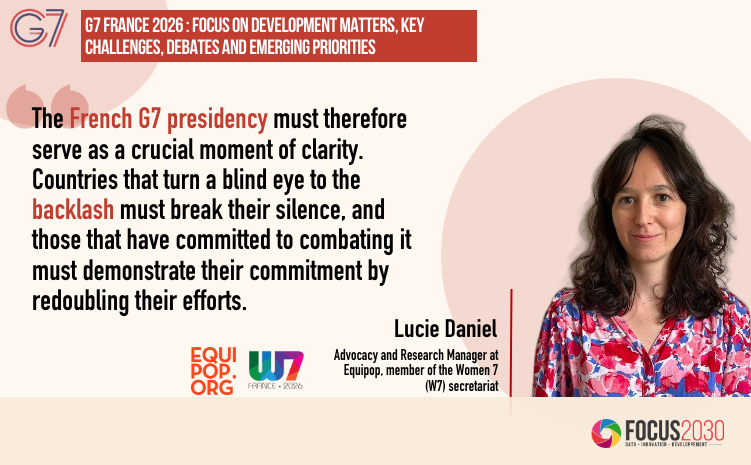
Lucie Daniel, Equipop and member of the Women 7 Secretariat
Élise Dufief, Iddri and member of Think 7