Contact

  • Français
  • Español
  • Surveys - Analysis

    The actors best placed to provide effective assistance

    There is wide support from French people for the role of international organizations (the WHO, the World Bank, the UN, etc.) in providing effective assistance to developing countries.

    In second place, the French believe that NGOs are best placed to help poor countries.

    To presume effective help from the government or local authorities, that is, expecting “the national” to effectively support “the international” on matters of poverty in the world, arrives only in third position, following international organizations and NGOs.

    French people are more reluctant about the idea of private non-for-profit organizations delivering aid effectively.

    This data comes from our survey conducted by the YouGov Institute and piloted by the research team at University College London and the University of Birmingham as part of the project Aid Attitudes Tracker which measures the evolution of opinions and behaviors on issues of international solidarity in four countries.

    ALSO READ

    Featured - alert - 09 September 2026

    What are multilateral development banks, and can they finance development and climate action at the scale needed? `

    Multilateral development banks, or MDBs, play a central role in financing international development and climate action. Created and owned by several states, they provide loans, grants, guarantees and technical assistance to low- and middle-income countries, as well as to certain private-sector actors. Their role has become even more important as financing needs increase sharply, major […]
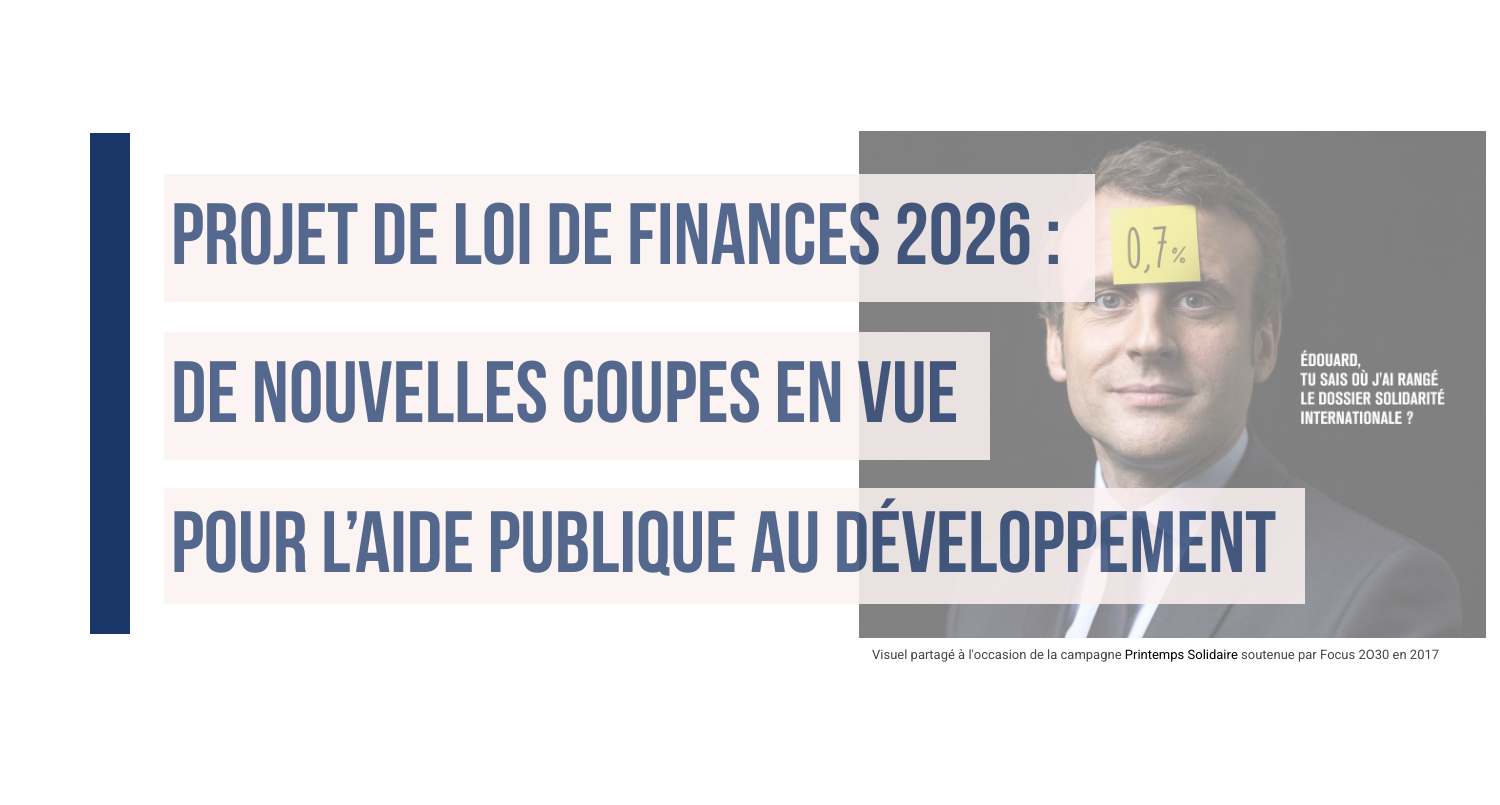
    2027 Budget Bill: France’s official development assistance budget once again faces a potential cut of 300 million euros
    Development financing - 11 August 2026

    2027 Budget Bill: France’s official development assistance budget once again faces a potential cut of 300 million euros

    After five successive cuts in less than two years, France’s official development assistance budget could fall again in 2027. According to the spending ceilings set by the Prime Minister, funding for the Official Development Assistance budget programme would be reduced to €3.3 billion. Since 2024, funding for this programme would therefore have fallen by 50%. […]
    Official Development Assistance: The Trend in Budget Cuts in France
    News - 01 August 2026

    Official Development Assistance: The Trend in Budget Cuts in France

    A few months after a first setback in official development aid, the French government has announced a new budget cut for 2024. Analysis.
    Development Financing - 22 June 2026

    G7 2026: A summit marked by consensus but without major progress on development issues

    During its meeting in Évian-les-Bains from June 15 to 17, 2026, under the French presidency, the G7 issued three declarations related to global health and development issues, focusing on international partnerships, the response to the Bundibugyo Ebola outbreak, and the fight against cancer. These declarations focus on blended finance, private-sector engagement, and international health cooperation. […]
    Gender equality - 18 June 2026

    Feminist Foreign Policies: Key Takeaways from the 5th Ministerial Conference in Madrid

    Held in Madrid on June 2 and 3, 2026, the 5th Ministerial Conference on Feminist Foreign Policy brought together approximately 700 participants, including representatives from around 60 countries and 140 civil society organizations. The 28 signatory states to the final political declaration linked gender equality, democracy, peace, human rights, and accountability, in a context marked by conflicts, democratic setbacks, and anti-rights movements.
    Gender equality - 17 June 2026

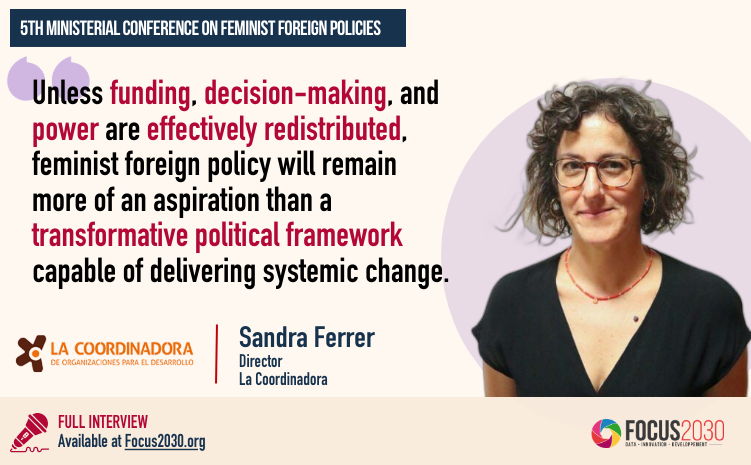
    Interview with Sandra Ferrer, Director of la Coordinadora, on the Fifth Ministerial Conference on Feminist Foreign Policies.

    As civil society organizations face growing restrictions and funding cuts worldwide, Sandra Ferrer examines the role Feminist Foreign Policy can play in protecting civic space, supporting feminist movements, redistributing power and resources and advancing more equitable and inclusive forms of international cooperation.