Contact

  • Français
  • Español
  • AnalysisReports

    Policy Brief n°6 : Innovative Financing for Development

    This Policy Brief provides a definition of innovative financing for development, and outlines the four principle types of instrument used, including existing examples of mechanisms already in place. One section is dedicated in particular to France’s innovative financing tools and policies.

    Innovative financing mechanisms (IFMs) provided around around 80 billion euros for development between 2000 and 2013. Less than 10% of this funding led to an increase in ODA however. In France, a tax on airline tickets generated over 2 billion euros between 2007 and 2017, and a separate tax on financial transactions raised 1.6 million euros between 2013 and 2017.

    After an overview of the history of innovative financing, this Policy Brief provides a definition of the key instruments and the four principle types of mechanism. After a specific section on France, the Brief concludes with the need to ensure that innovative financing remains complimentary and separate to existing ODA funds.

    You can download Policy Brief n°6 in French here. An English translation is forthcoming.
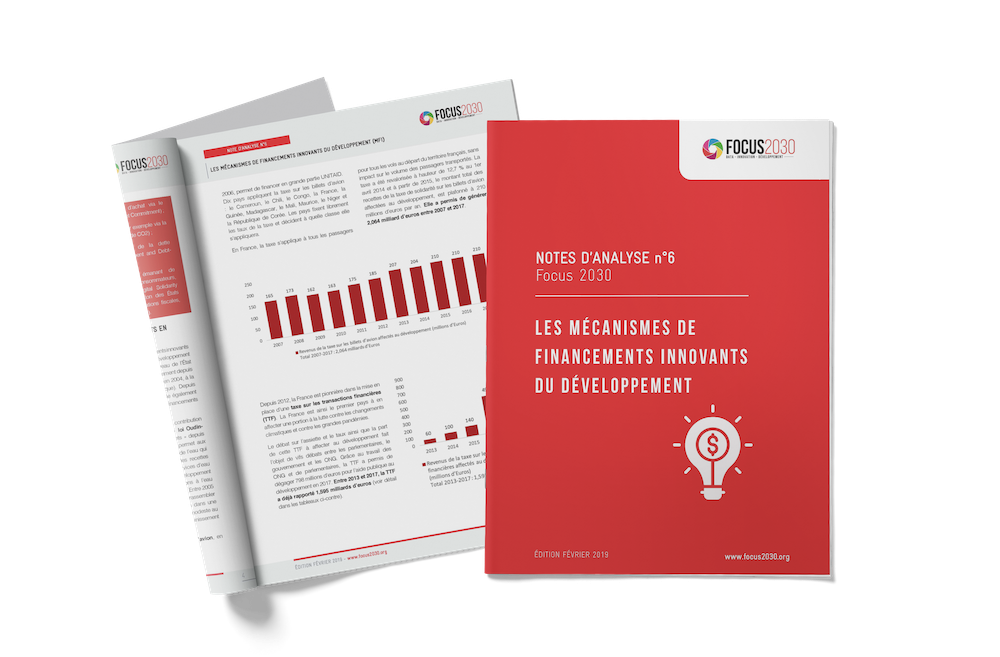
    Note d’analyse n°6 : Les mécanismes de financements innovants du développement
    To learn more
  • Note d’analyse n°6 : Les mécanismes de financements innovants du développement
  • ALSO READ

    Development Financing - 22 June 2026

    G7 2026: A summit marked by consensus but without major progress on development issues

    During its meeting in Évian-les-Bains from June 15 to 17, 2026, under the French presidency, the G7 issued three declarations related to global health and development issues, focusing on international partnerships, the response to the Bundibugyo Ebola outbreak, and the fight against cancer. These declarations focus on blended finance, private-sector engagement, and international health cooperation. […]
    G7 - 15 June 2026

    G7 France 2026 : focus on development matters, key challenges, debates and emerging priorities

    In 2026, France holds the presidency of the G7, with the Heads of State Summit scheduled to take place in Evian from June 15 to 17. Keep up with the latest news.
    Reforming the international financial architecture: where do we stand?
    Development financing - 04 June 2026

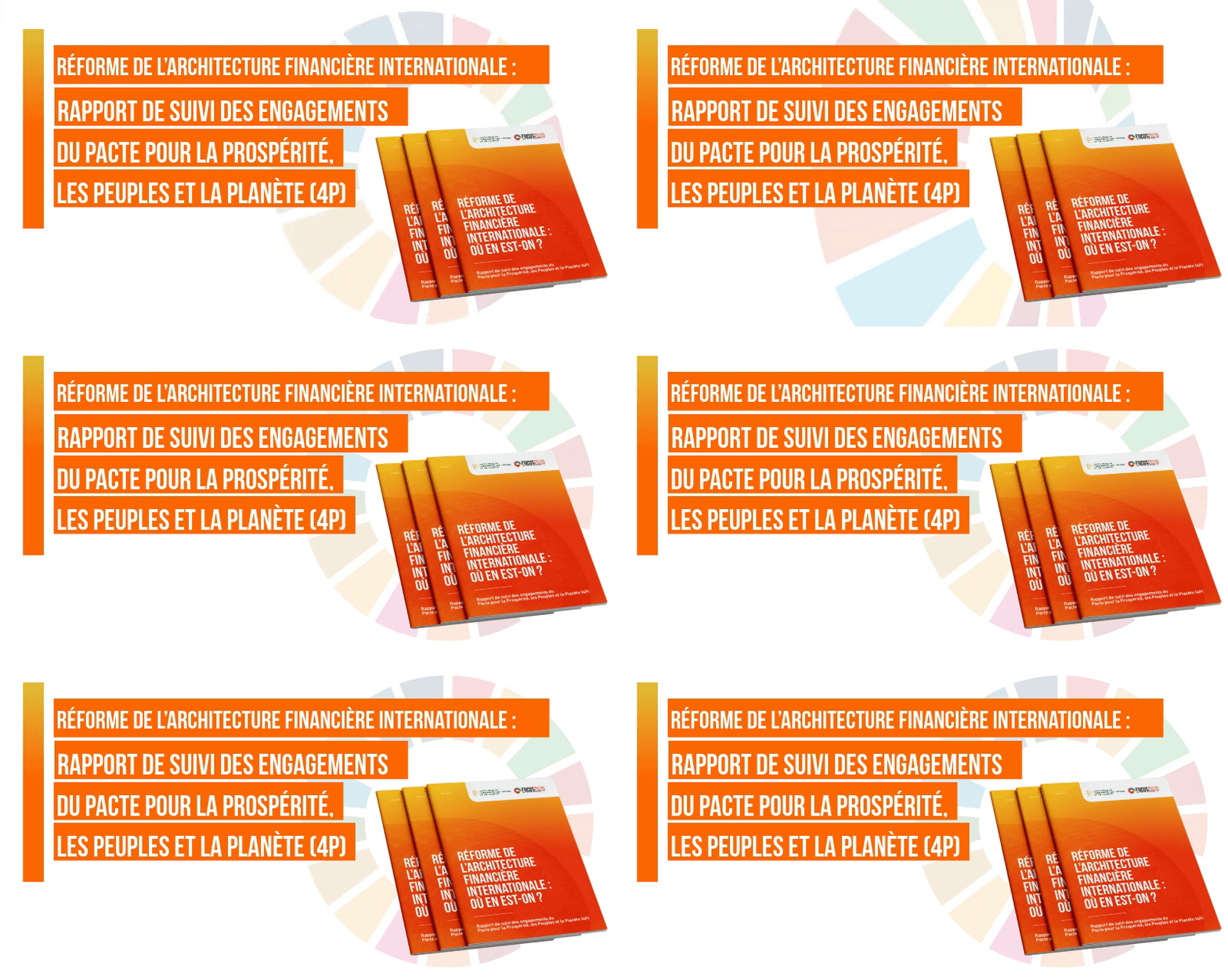
    Reforming the international financial architecture: where do we stand?

    Focus 2030 Reforming the international financial architecture: where do we stand? Focus 2030 independently tracks the commitments made at the Summit for a New Global Financing Pact in 2023. Updated on an ongoing basis, this tracker documents progress towards reforming the international architecture for development and climate finance. Access the tracker Download the report · […]
    G7 - 02 June 2026

    Financing international development: the decisive role of G7 countries in a context of disengagement

    Special feature: French G7 Presidency Explore our special report to understand the issues related to the French G7 Presidency in 2026, gain insight into the key policy priorities, and follow the latest updates. Access the special report ➔ In 2026, France’s G7 Presidency aims to bring development financing back to the forefront of the international […]
    Analysis - 18 May 2026

    In Nairobi, the Africa Forward Summit signals a shift toward a new Franco-African development finance doctrine

    Co-hosted by France and Kenya on 11-12 May 2026, the Africa Forward Summit marked an attempt to redefine relations between France and the African continent around a new narrative: one centered on equal partnership, private investment, and strategic autonomy. Behind the €23 billion in announced commitments, the summit also reflects a deeper transformation: the explicit […]
    Historic drop in Official Development Assistance in 2025
    Development financing - 09 April 2026

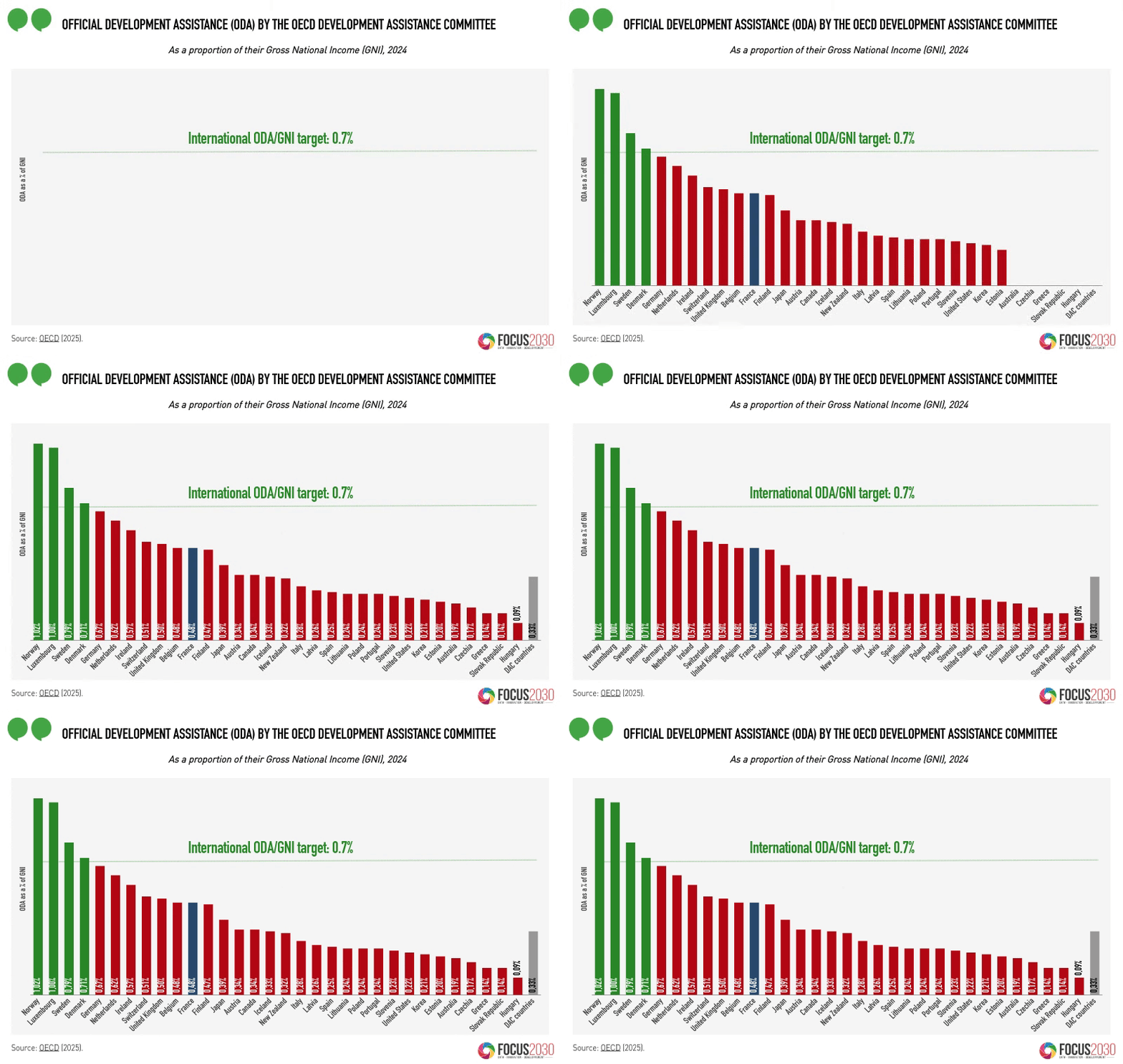
    Historic drop in Official Development Assistance in 2025

    ODA from DAC members fell to 174.3 billion USD in 2025, a 23.1% drop from 2024 (-50 billion USD in real terms), representing 0.26% of their income. It is the highest fall on record.